Semiconductor production capacity sees global increase
Global semiconductor manufacturing capacity is projected to increase by 6.1% in 2024, reaching a monthly output of 33.7 million 200mm-equivalent wafers. This growth is driven by new fabs and equipment investments.
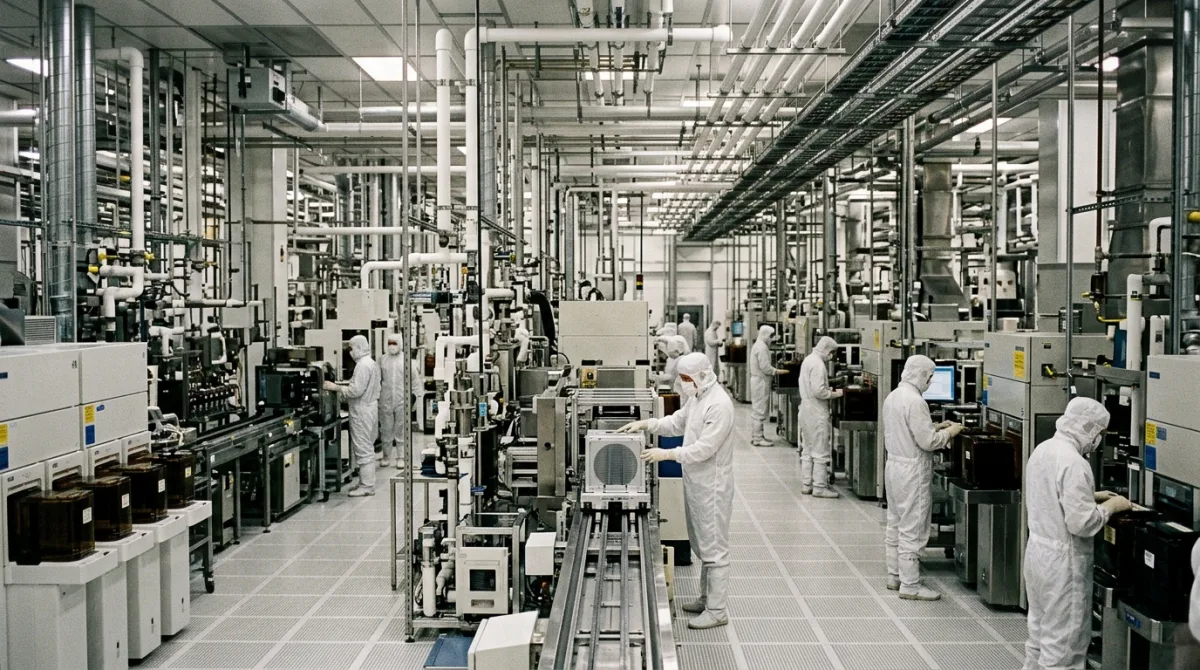
Global Chip Production Capacity Rises Amidst Strategic Investment
Global capacity for semiconductor manufacturing has expanded significantly, marking a notable shift from recent periods of constrained supply that impacted industries worldwide. This increase is largely driven by substantial, multi-billion-pound investments in constructing new fabrication plants and upgrading existing facilities across multiple key regions, including North America, Europe, and parts of Asia. The move aims to address both current robust demand for digital technologies and future technological requirements for an ever-widening array of electronic devices, from advanced computing to everyday appliances. This extensive build-out is now altering the fundamental dynamics of the global chip supply chain, with long-term implications for stability, pricing, and technological development now under close scrutiny by industry analysts and policymakers.
The new capacity represents a strategic effort to build resilience after years of supply chain fragility. Industry experts suggest this expansion could lead to a more balanced market, reducing the volatility that has characterised the sector.
Responding to Shortages: A Sequence of Global Investment
The impetus for this surge in production capacity stems directly from the acute global chip shortages experienced from late 2020 through much of 2022, which severely disrupted numerous industries, including automotive, consumer electronics, and data centres. These disruptions highlighted critical vulnerabilities in highly concentrated supply chains and spurred a collective urgency to bolster manufacturing capabilities globally. Governments worldwide responded with significant incentive packages and strategic initiatives, such as the US CHIPS and Science Act, the European Chips Act, and similar programmes in Japan and India, designed to onshore or expand domestic semiconductor production and diversify supply sources.
In response, major foundry companies and integrated device manufacturers subsequently committed hundreds of billions of pounds to construct new, highly advanced facilities, known as 'fabs', and procure cutting-edge manufacturing equipment. These monumental investments, often requiring several years for planning, construction, and ramp-up, are now beginning to yield operational capacity, fundamentally altering the global semiconductor supply landscape and aiming to mitigate future supply shocks.
Factors Shaping the Future of Chip Supply
The long-term impact and ultimate success of this expanded semiconductor production capacity hinges on several interdependent factors that will collectively shape the industry's trajectory over the coming decade. Sustaining the immense capital outlays required to build and operate these state-of-the-art facilities, while navigating potentially fluctuating market demand, remains a continuous financial and strategic challenge for manufacturers. Furthermore, the ability to rapidly integrate next-generation manufacturing processes and maintain a competitive edge in an industry defined by rapid innovation will be crucial for distinguishing leading players in this intensely capital-intensive sector. The ongoing geopolitical landscape also plays a profound role, influencing trade policies, talent movement, and the stability of supply routes for critical materials.
- Market Demand: Sustained and robust consumer and industrial demand for advanced electronic devices, artificial intelligence hardware, and high-performance computing power is critical to absorb the increased chip output effectively and prevent oversupply.
- Geopolitical Stability: Persistent geopolitical tensions, trade restrictions, or regional conflicts could fragment global supply chains, impede the free flow of technology and materials, and undermine long-term investment confidence.
- Technological Advancement: Continuous, substantial investment in research and development for next-generation chip designs and cutting-edge manufacturing processes is necessary to avoid rapid obsolescence of facilities and meet ever-evolving performance requirements.
- Skilled Workforce: The global availability of highly specialised engineers, technicians, and researchers, trained in the complex disciplines required to operate, maintain, and innovate within sophisticated fabrication facilities, remains a persistent and growing bottleneck.
These elements collectively determine whether the current expansion leads to a stable, robust, and diversified global supply chain or results in periods of oversupply, underutilisation of expensive assets, and renewed market volatility. The sheer scale of investment means that even minor shifts in these fundamental factors can have widespread repercussions for the profitability of individual firms and the overall health of the global technology ecosystem.
Impact on Key Stakeholders
Global Consumers
The increased global semiconductor production capacity is expected to significantly alleviate some of the inflationary pressures that have impacted the cost of electronic goods for consumers across the UK and beyond in recent years. During periods of acute scarcity, manufacturers frequently faced higher component costs and extended lead times, often passing these increased expenses onto the end-user, leading to elevated prices for everything from new smartphones and laptops to indispensable home appliances and vehicles. A more stable and potentially abundant supply of chips could stabilise or even reduce the unit cost of these devices, making them more accessible to a broader consumer base.
This improved availability also means a reduction in frustratingly long waiting times and order backlogs that became a common experience for many during the peak of the chip shortage, particularly for high-demand items like new automobiles or popular gaming consoles. Over the next few years, consumers are likely to observe a greater variety of products readily available on retail shelves and significantly quicker fulfillment of online orders. The broader economic benefit could manifest as a slight easing of household expenditure pressures on technology-related purchases, potentially freeing up discretionary income in other areas of the economy. This shift represents a tangible improvement in the purchasing experience for millions worldwide.
The Risks of Oversupply
While the expansion of semiconductor production capacity is widely lauded as a necessary response to past supply chain vulnerabilities, a significant counter-argument suggests this aggressive build-out could, in fact, lead to an environment of market oversupply. Critics contend that the current wave of investment, heavily spurred by government incentives and a reactive response to pandemic-era shortages, might ultimately outpace genuine, sustainable demand growth in the coming years. This scenario risks creating a glut of certain types of chips, particularly if future global economic slowdowns, shifts in consumer spending, or unforeseen technological obsolescence reduce anticipated consumption levels. Such an imbalance would disrupt the intended benefits of increased capacity.
The substantial global investment in new semiconductor fabrication capacity risks creating a future market oversupply, leading to price crashes, significant underutilisation of expensive new facilities, and potentially stifling future innovation.
An outcome of sustained oversupply would severely impact the profitability of chip manufacturers, potentially triggering intense price wars and leading to substantial financial write-downs on newly built, multi-billion-pound facilities that are not operating at optimal capacity. This scenario could deter future investment in research and development, creating a cyclical boom-and-bust pattern within the industry rather than the desired stable and predictable supply. Such volatility would ultimately threaten the long-term health and innovation potential of the global technology sector, making the precise balance between supply and demand a delicate and challenging forecast for all stakeholders. The memory chip market, for instance, has historically experienced such cycles.
Uncertainties Ahead
Future Demand Composition
A critical unanswered question centres on the precise composition of future demand for semiconductors, specifically the evolving balance between leading-edge and mature node chips. While much of the recent, high-profile investment has focused on developing and expanding capacity for advanced processing nodes—those critical for artificial intelligence, high-performance computing, and next-generation smartphones—a substantial portion of the global market still relies heavily on older, larger process technologies. These mature nodes are indispensable for a vast array of products, including automotive control units, industrial automation systems, medical devices, and many everyday consumer electronics. It remains unclear whether the current global capacity expansion adequately addresses potential future bottlenecks across both segments, or if the intense focus and capital allocation towards advanced fabs might inadvertently leave legacy chip supplies vulnerable to new, perhaps less dramatic but equally disruptive, shortages. The dynamic evolution of technology and application requirements means this critical mix is constantly shifting, presenting a complex and ongoing challenge for long-term capacity planning and resource allocation within the semiconductor industry.
Monitoring the Road Ahead
Industry observers will be closely monitoring several key indicators over the coming months and years to assess the ongoing impact and future trajectory of this expanded semiconductor capacity. Inventory levels across the entire supply chain, from raw material suppliers to chip manufacturers and onward to end-product assemblers, will provide early and crucial signals of whether current supply is meeting, exceeding, or falling short of real-world demand. Any significant, sustained build-up in stock could indicate impending market adjustments, potentially leading to price corrections or production slowdowns.
Furthermore, the rate of new equipment orders placed by major foundries and integrated device manufacturers, alongside the actual construction timelines and operational ramp-ups for announced fabrication plants, will offer tangible insights into the sustained pace of investment and the industry's collective confidence in future demand projections. Governments worldwide may also adjust their existing incentive programmes or introduce new regulatory frameworks based on observed market dynamics, further influencing the regionalisation or globalisation of production. These observable signals, rather than speculative forecasts, will collectively inform the market's progression and its ability to achieve a stable equilibrium without necessitating specific date-bound predictions.
Reader responses
Responses are read by the desk before they appear. A factual correction reaches us fastest here, and is made on the article itself with a dated note.
No responses on this report yet.