Data center power demands reshape service pricing models
As data center power consumption rises significantly, service providers are adjusting their pricing structures, shifting from traditional capacity-based models to those that reflect energy usage.
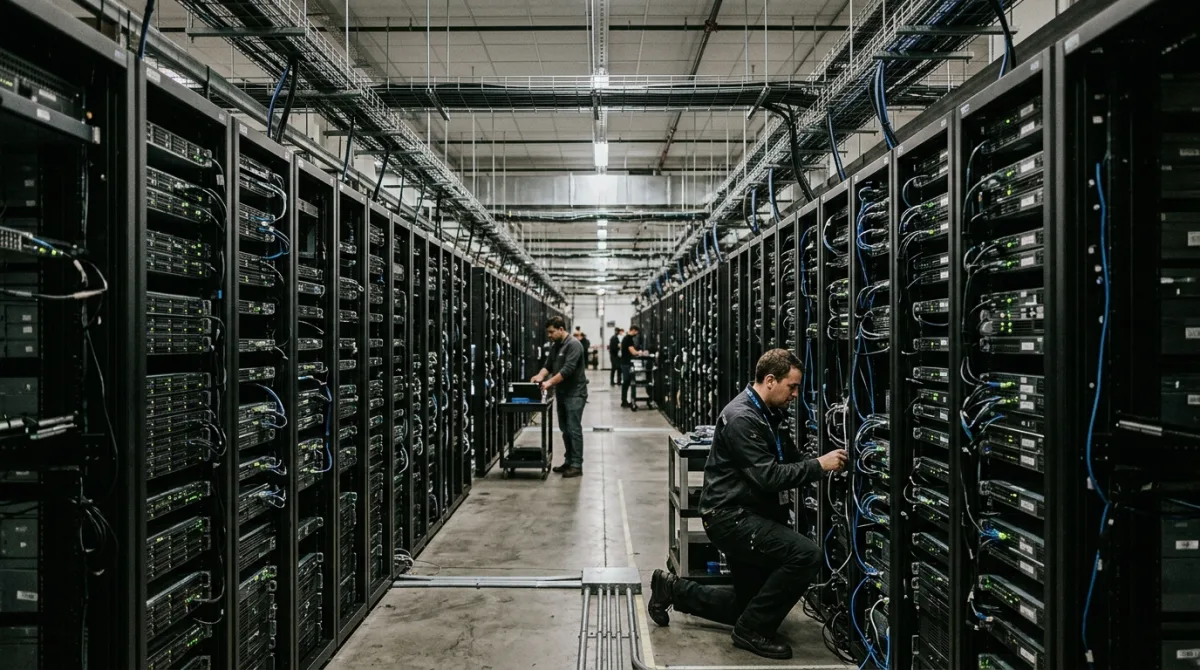
Data Centres Recalibrate Pricing as Power Costs Soar
Cloud and co-location service providers are introducing or modifying pricing structures to explicitly reflect the direct energy consumption of client workloads and infrastructure. This marks a significant shift from purely compute and storage-based billing to models where power usage, particularly for high-density applications, carries a more explicit and variable cost component.
The change is driven by the escalating electricity demands of modern data centre operations, especially those supporting artificial intelligence and advanced analytics, making energy a primary and increasingly volatile cost driver. The industry's long-standing practice of bundling power costs within broader service fees is now being re-evaluated, leading to a new era of granular energy accounting for enterprise clients.
The Rise of Power-Intensive Workloads
The proliferation of computationally intensive technologies, such as artificial intelligence, machine learning, and complex data analytics, has significantly amplified the power requirements within data centres globally. These advanced workloads necessitate high-performance graphics processing units (GPUs) and specialised hardware that consume substantially more electricity per rack than traditional server configurations. Consequently, the average power density within data centre facilities has risen dramatically, placing unprecedented strain on existing electrical infrastructure and cooling systems designed for lower-density environments. This surge in hardware power draw has pushed facilities to their thermal and electrical limits.
Simultaneously, global energy markets have experienced periods of significant volatility and sustained price increases over recent years, directly impacting the operational expenditure of data centre operators. Grid capacity in various regions, including parts of the UK and Europe, has also struggled to keep pace with the accelerating demand from these power-hungry facilities, leading to delays in new data centre connections and increasing infrastructure costs. Faced with these escalating and increasingly unpredictable energy costs, providers are compelled to adjust their commercial models, passing a greater proportion of these expenses directly to the end-users of their services through more transparent, usage-based power charges.
Factors Shaping Future Pricing Models
The ongoing evolution of data centre service pricing is being shaped by several interconnected factors, each presenting distinct trade-offs for operators and their clientele. These influences extend beyond mere market forces, touching on technological advancements and regulatory frameworks.
- Energy Costs: Volatility and regional variations in electricity prices directly impact operational budgets for data centres, compelling providers to choose between absorbing substantial cost increases or passing them directly to customers, which affects service competitiveness.
- Cooling Efficiency: The ability of data centres to dissipate the immense heat generated by powerful, high-density servers significantly influences overall Power Usage Effectiveness (PUE) metrics and operational expenditure. Investments in advanced cooling systems, such as direct-to-chip liquid cooling, offer long-term energy savings but require substantial upfront capital expenditure and complex infrastructure modifications.
- Hardware Evolution: The continuous development of more powerful, yet often more power-hungry, CPUs and GPUs drives demand for higher wattage per rack and more robust power delivery systems. Balancing performance gains and processing capacity with energy efficiency metrics becomes a critical design challenge for both hardware manufacturers and data centre architects, influencing upgrade cycles.
- Regulatory Pressure: Government initiatives and environmental targets increasingly push for sustainable data centre operations, including mandatory reporting on carbon footprints and incentives for energy-efficient designs. This can lead to new compliance costs for operators or opportunities to leverage green energy tariffs and carbon offset schemes to attract environmentally conscious clients.
The interplay of these factors creates a complex economic landscape for data centre operators, where decisions about infrastructure investment, energy procurement, and service differentiation directly influence their pricing strategies and profitability. Clients, in turn, must now factor these variables into their total cost of ownership for IT services.
Impact on Enterprise IT Budgets
Cloud Service Consumers
Start-ups and small to medium-sized enterprises (SMEs) relying heavily on public cloud infrastructure for their operational backbone will experience direct increases in their monthly IT expenditure. Businesses involved in developing artificial intelligence models, running extensive data analytics, or rendering high-resolution media will face particularly higher operational costs for their cloud services due to their intensive power usage, impacting budget forecasting over quarterly or annual cycles.
Co-location clients, who lease physical rack space within data centres to house their own hardware, are already seeing power usage billed separately or at significantly higher rates per kilowatt-hour. This shifts the financial burden of energy cost fluctuations directly to them, compelling them to monitor their power draw more diligently and potentially accelerate investments in more energy-efficient hardware. These changes affect their long-term infrastructure planning and could influence decisions on data centre locations or whether to maintain on-premises infrastructure over multi-year contracts.
The Case for Temporary Adjustment
The argument posits that these pricing shifts are a reactive measure to specific, transient market conditions, rather than a fundamental recalibration of value in the long term. This perspective views current energy price volatility and grid constraints as temporary challenges that will eventually be overcome by market forces and technological advancements.
These adjustments represent a temporary response to current energy market volatility, not a permanent structural change to how data centre services are fundamentally valued.
This perspective suggests that long-term trends, such as ongoing improvements in energy efficiency within hardware designs or the expansion of renewable energy sources, could eventually mitigate the current pressures on data centre power budgets. Furthermore, significant investment in grid upgrades and new power generation capacity might stabilise electricity prices, potentially reducing the need for providers to externalise these costs so directly to their customers. Some industry observers contend that intense market competition among cloud and co-location providers will eventually force a return to more consolidated pricing models, absorbing power costs within broader service fees to maintain competitive advantage.
Uncertainty in Grid Modernisation
The Pace of Grid Modernisation
It remains unclear how quickly national grids, particularly in established markets like the UK and continental Europe, can adapt to the escalating power demands of new data centre developments. The capacity for new connections and the stability of supply, especially for facilities requiring tens or hundreds of megawatts, present a significant open question. The speed and scale of investment in renewable energy sources and upgraded transmission infrastructure will influence long-term energy availability and cost stability for these facilities, as will the regulatory frameworks governing such developments. Furthermore, the extent to which on-site power generation solutions, such as micro-grids, advanced battery storage, or even small modular reactors, can genuinely alleviate dependence on the public grid for large-scale operations is still being assessed for economic and practical viability.
Observable Industry Signals
Cloud providers are expected to continue rolling out more granular pricing tiers that explicitly differentiate costs based on the power consumption of specific compute instances, data transfer volumes, and even the type of hardware deployed. This will likely be accompanied by more sophisticated client dashboards, offering detailed real-time monitoring of energy usage and associated costs, enabling businesses to optimise their workloads for both performance and energy efficiency. The development of 'green' tariffs, where clients pay a premium for certified renewable energy sourcing for their cloud footprint, is also anticipated to become more widespread.
Data centre operators are expected to intensify investment in advanced energy-efficient cooling technologies, such as direct-to-chip liquid cooling systems and adiabatic cooling, to manage higher rack densities more effectively. They will also pursue strategies for more direct and stable power sourcing, including long-term power purchase agreements for renewable energy, on-site solar or wind generation, and grid-scale battery storage solutions to enhance resilience and manage peak demand. The industry will likely see further development in advanced energy management software that dynamically optimises workload placement across facilities based on real-time power availability, cost differentials, and carbon intensity.
Reader responses
Responses are read by the desk before they appear. A factual correction reaches us fastest here, and is made on the article itself with a dated note.
No responses on this report yet.