New semiconductor manufacturing incentives impact output
New government incentives aimed at bolstering domestic semiconductor manufacturing are beginning to show measurable effects on global output, influencing supply chains and market dynamics. The initiatives are designed to increase local production capacity.
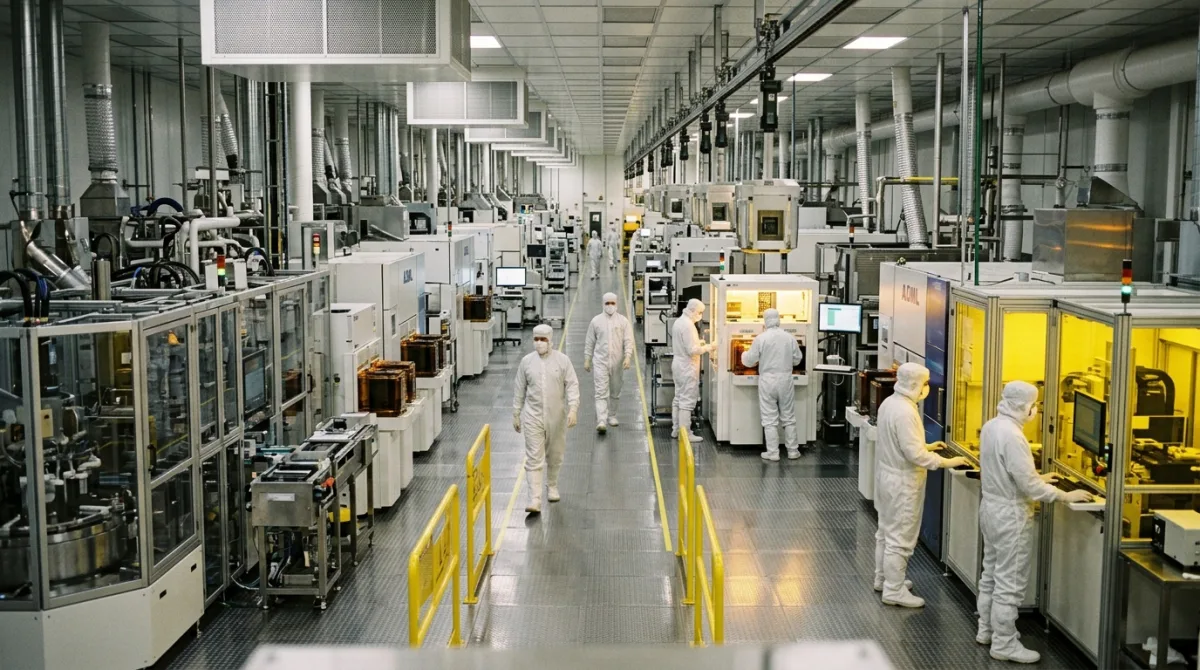
New semiconductor manufacturing incentives impact output
Global initiatives aimed at bolstering domestic semiconductor production have begun to demonstrably influence manufacturing output, leading to observable shifts in chip supply dynamics across key regions. These programmes, predominantly comprising substantial grants, tax credits, and research funding, are designed to incentivise the construction and expansion of advanced fabrication facilities within national borders.
Initial assessments indicate a measurable increase in specific types of chip production, particularly in segments focused on mature nodes and some advanced logic, suggesting an early response to the policy interventions. While the full scope of these multi-year investments is yet to materialise, the initial phase points towards a gradual rebalancing of the global manufacturing footprint.
The path to domestic chip production
The impetus for these widespread manufacturing incentives emerged directly from the profound supply chain disruptions experienced globally in the wake of the pandemic, which exposed critical vulnerabilities in the semiconductor ecosystem. Shortages of crucial components brought numerous industries, from automotive to consumer electronics, to a standstill, highlighting an over-reliance on concentrated production hubs.
Governments subsequently prioritised strategic independence and economic resilience, identifying semiconductor manufacturing as a foundational industry requiring significant domestic investment. This led to a series of legislative actions and policy announcements in major economies, allocating unprecedented levels of public funding to attract and support chipmakers.
The sequence of events saw initial pledges transform into concrete legislative frameworks, followed by applications for funding from major chip manufacturers and, eventually, the commencement of construction or expansion projects. This phased approach has now reached a point where some of these new or upgraded facilities are coming online, contributing to an altered output landscape.
Factors shaping the production landscape
Several intricate factors continue to determine the true impact and long-term success of these global semiconductor manufacturing incentives, often involving complex trade-offs between immediate gains and strategic objectives.
- Capital intensity: Constructing a modern chip fabrication plant demands tens of billions of pounds and several years, creating a significant barrier to entry and requiring sustained financial commitment to see projects through to production.
- Skilled workforce: The highly specialised nature of semiconductor manufacturing necessitates a substantial pool of engineers, technicians, and researchers, a global talent pool that remains intensely competitive and often scarce.
- Supply chain resilience: While incentives target chip production, the underlying supply chain for equipment, raw materials, and specialist chemicals remains globally interdependent, limiting the extent of true regional self-sufficiency.
- Market demand cycles: The industry is notoriously cyclical, and sustained high output requires alignment with evolving global demand for chips in diverse applications such as artificial intelligence, automotive systems, and advanced computing.
Each of these elements presents ongoing challenges, compelling governments and corporations to continually reassess their strategies and investments in a rapidly evolving technological and geopolitical environment.
Impact on global chip manufacturers
Global Semiconductor Manufacturers
Major global semiconductor manufacturers are directly affected by these incentives, influencing their investment strategies and operational footprints. Companies that previously concentrated production in a few highly efficient regions are now evaluating and committing to multi-billion-pound investments in new geographies, often balancing the allure of subsidies against higher operational costs in these new locations.
The incentives drive a strategic re-evaluation of where future capacity is built, potentially leading to a more geographically diversified manufacturing base over the next decade. This involves complex logistical and engineering challenges, as factories must be constructed to the highest global standards while integrating into new local ecosystems for talent and infrastructure. The financial commitment from public funds significantly de-risks these massive capital expenditures for the companies involved, making otherwise uneconomical regional expansions viable.
For smaller or more niche manufacturers, the incentives can either create opportunities for expansion within their specific segments or intensify competition as larger players receive substantial backing. This shift requires careful management of intellectual property and supply chain relationships, as new regional partners and suppliers emerge.
The counter-argument: market distortion
A significant objection to the widespread deployment of semiconductor manufacturing incentives centres on the potential for market distortion and the inefficient allocation of capital. Critics argue that these subsidies artificially inflate investment in high-cost regions, diverting resources from locations that might offer more competitive advantages based purely on economic efficiency.
The concern is that a global 'subsidy race' could lead to an oversupply of certain types of chips or a misallocation of manufacturing capabilities, ultimately resulting in higher costs for consumers or taxpayers without genuinely enhancing long-term resilience. Such programmes could also create a dependency where manufacturers become reliant on government support rather than market forces to sustain operations.
The global proliferation of semiconductor subsidies risks fragmenting an inherently integrated industry, leading to less efficient production and a net increase in global manufacturing costs without guarantees of enhanced security.
Furthermore, the substantial public investment could be viewed as a burden on national treasuries, potentially crowding out funding for other critical public services or strategic industries. The long-term economic viability of these subsidised facilities, once initial incentives expire, remains a point of contention.
The long-term sustainability of output
Long-Term Sustainability
The enduring question revolves around the long-term sustainability and true economic benefit of the increased output achieved through these incentive programmes. While initial output rises, the ability of these new regional fabs to remain competitive and profitable over decades, independent of ongoing subsidies, is not yet definitively established. Factors such as evolving technological nodes, shifts in global demand, and the availability of highly specialised talent will play a critical role in determining their viability. The industry's rapid pace of innovation means that today's cutting-edge processes can become obsolete within a few years, requiring continuous, massive reinvestment to maintain relevance.
Observable signals for future trends
Observers will monitor several key signals to gauge the ongoing impact and future trajectory of semiconductor manufacturing output. Further announcements of new fabrication plant constructions or expansions, particularly those targeting leading-edge process technologies, will indicate continued investment momentum. Changes in the reported lead times for specific chip components, especially those that experienced severe shortages, could signal an easing of supply constraints attributable to new capacity coming online.
Reports on capital expenditure from major semiconductor firms, alongside shifts in their geographical investment patterns, will offer insights into how companies are strategically responding to incentive landscapes. Additionally, any renegotiations of trade agreements or new regulatory frameworks concerning technology transfer and export controls will reflect the evolving geopolitical dimension influencing where chips are designed and produced. The utilisation rates of new and existing facilities will also provide a clear indication of whether increased capacity is meeting commensurate demand or leading to potential oversupply in certain segments.
Reader responses
Responses are read by the desk before they appear. A factual correction reaches us fastest here, and is made on the article itself with a dated note.
No responses on this report yet.