Data center energy costs shift infrastructure spending priorities
Rising energy expenses are prompting a significant reallocation of capital within the data center industry, shifting investment away from traditional hardware and towards energy-efficient infrastructure solutions.
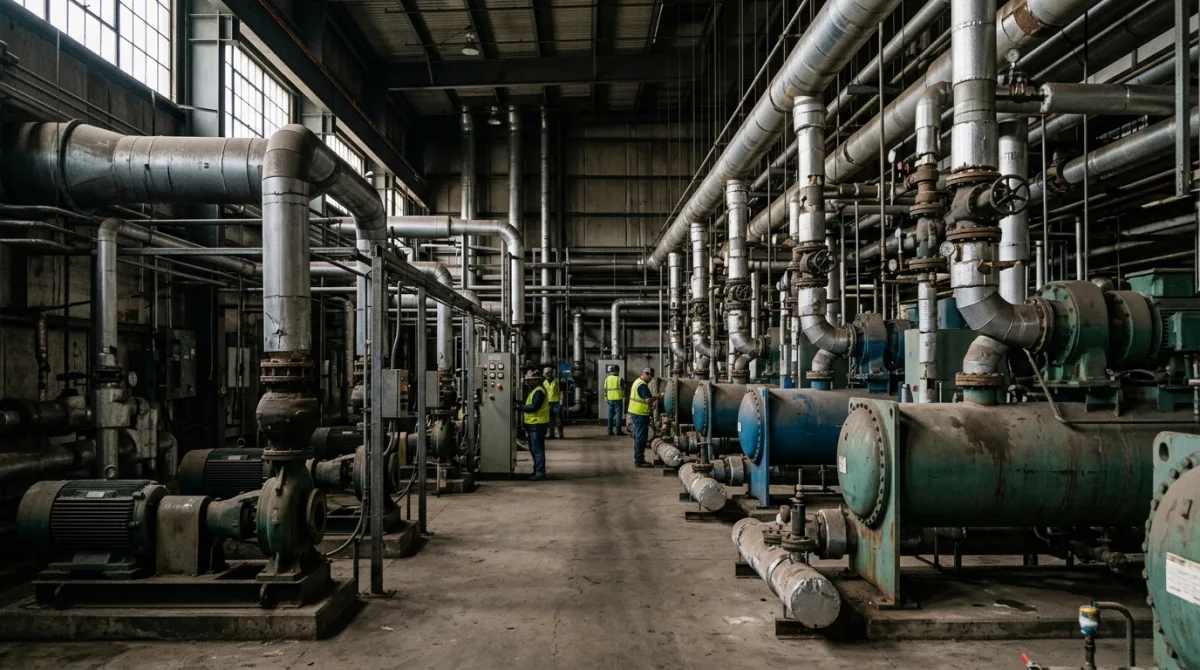
Shifting Capital Allocation
Investment patterns in new data centre infrastructure are increasingly prioritising energy efficiency and sustainable power sources over raw computational capacity, a direct response to escalating operational costs and tightening environmental regulations. This strategic redirection affects the design, location, and technology choices for facilities globally, marking a significant departure from previous growth-at-any-cost models.
Rather than simply expanding server counts, operators are now intently focused on optimising power utilisation effectiveness (PUE) and exploring advanced cooling technologies. This shift is reshaping procurement strategies, favouring hardware that delivers more processing power per watt and demanding greater transparency on energy consumption from vendors.
The Path to Cost Consciousness
The sequence leading to this strategic pivot began with a period of sustained and unpredictable volatility in global energy markets. Geopolitical events and supply chain disruptions caused sharp increases in electricity tariffs, directly inflating the operational expenditure for data centres, which are among the largest industrial consumers of power.
Concurrently, regulatory frameworks across jurisdictions, including the United Kingdom and the European Union, have introduced more stringent targets for carbon emissions and energy reporting. These mandates have compelled data centre operators to account for their environmental footprint more rigorously, adding compliance costs and reputational risk to inefficient operations.
This confluence of rising costs and regulatory pressure exposed the financial vulnerability of infrastructure models heavily reliant on inexpensive, abundant power. Organisations found that the escalating energy bill began to erode profit margins and render previous expansion plans less viable without significant redesign. The rapid growth of energy-intensive workloads, particularly those related to artificial intelligence and machine learning, further exacerbated this financial strain, prompting an urgent re-evaluation of long-term infrastructure spending priorities.
Key Determinants of the Transition
Several concrete factors are now deciding the pace and direction of this infrastructure spending shift, influencing decisions from hardware procurement to facility design. These elements often involve trade-offs between immediate cost savings, long-term sustainability goals, and the imperative to meet growing computational demand.
- Energy cost volatility: The unpredictable nature of wholesale electricity and natural gas prices directly impacts operational budgets, pushing investment towards technologies that offer predictable consumption or leverage renewable energy sources with fixed-price power purchase agreements.
- Cooling technology maturity: Advances in liquid cooling, direct-to-chip cooling, and immersion cooling systems offer significantly improved thermal management compared to traditional air-cooling, reducing the energy overhead associated with keeping servers operational.
- Regulatory frameworks: Government-mandated efficiency targets, carbon taxes, and sustainability reporting requirements compel operators to invest in greener infrastructure to avoid penalties and maintain social licence, often providing tax incentives for such investments.
- Hardware efficiency gains: The continuous development of more energy-efficient processors, memory, and storage devices by chip manufacturers allows for greater computational density within existing power envelopes, reducing the need for new, energy-intensive builds.
These factors interact dynamically, with improvements in one area often unlocking further opportunities in another. For example, more efficient hardware can reduce the load on cooling systems, further improving overall facility PUE and lowering energy bills, creating a feedback loop for sustainable investment.
Impact on Hyperscale Cloud Providers
Hyperscale Cloud Providers
Hyperscale cloud providers, operating some of the world's largest data centre campuses, are acutely affected by this shift due to their enormous energy consumption. Their capital expenditure budgets are increasingly directed towards constructing facilities in regions with abundant renewable energy sources or stable, lower electricity prices, often influencing national infrastructure development.
These providers are investing heavily in proprietary cooling solutions, including advanced liquid and evaporative systems, to reduce their PUE figures further. Over the next five to ten years, their procurement strategies are expected to favour server architectures that deliver superior performance per watt, potentially accelerating the adoption of alternative processor designs like ARM in specific workloads, rather than solely relying on traditional architectures.
Enterprise IT Departments
Enterprise IT departments managing on-premise data centres face different, though related, pressures. Many are accelerating plans to consolidate existing server rooms, decommission older, inefficient hardware, or migrate workloads to public cloud platforms where energy efficiency is handled by the hyperscalers. For those maintaining local infrastructure, the focus is on smaller-scale improvements such as virtualisation, modernising uninterruptible power supplies (UPS), and upgrading cooling units.
Over the next three to five years, a substantial share of enterprise infrastructure spending is projected to move away from large, general-purpose server purchases towards targeted investments in edge computing solutions or more efficient, purpose-built appliances. The decision often hinges on a detailed cost-benefit analysis comparing the upfront capital outlay for upgrades against long-term operational savings from reduced energy consumption.
The Contention of Sustained Demand
While the focus on energy costs has undeniably reshaped investment strategies, some industry observers argue that the emphasis on this single factor might be disproportionate. They contend that the fundamental driver for infrastructure spending remains the relentless global demand for processing power and storage, a requirement that continues to grow irrespective of energy prices.
Some industry observers contend that the focus on energy costs, while significant, is overstated, and that the primary driver for infrastructure spending remains the relentless demand for processing power and storage, especially with the proliferation of generative artificial intelligence.
This perspective suggests that even with higher energy costs, the imperative to deliver new digital services, manage ever-increasing data volumes, and support advanced applications like generative AI will always necessitate expanding computational capacity. Proponents of this view argue that energy efficiency is merely a secondary consideration, a means to mitigate costs rather than the primary determinant of whether and where new infrastructure is deployed. They highlight that despite rising energy prices, the overall growth in data centre capacity has not halted, merely shifted its characteristics.
Uncertainty in Cloud Pricing Models
The long-term impact on cloud pricing
One significant area of uncertainty concerns how these efficiency gains and shifts in infrastructure spending will ultimately affect cloud service pricing for end-users. It is not yet clear whether the substantial investments made by hyperscale providers in energy-efficient hardware and sustainable power sources will lead to lower service costs for customers, or if these savings will be absorbed by providers to offset their own increased capital expenditure and operational overheads. The complexity of cloud pricing, often encompassing compute, storage, networking, and support, makes it difficult to isolate the impact of energy costs on specific service lines. How market competition among providers will factor into these pricing decisions also remains an open question, with potential for both cost pass-through and competitive absorption depending on the service and region.
Observable Signals for the Future
In the coming months and years, several observable signals will indicate the ongoing trajectory of this shift in infrastructure spending. Watch for public announcements from major technology companies detailing new data centre builds that explicitly highlight PUE targets or renewable energy integration, rather than just raw server capacity figures. Increased investment in research and development for novel cooling technologies, such as advanced immersion or adiabatic systems, will also serve as a strong indicator of sustained commitment to efficiency.
Further signals will include changes in procurement tenders from large data centre operators, which are expected to place greater emphasis on power-to-performance ratios and verifiable sustainability credentials for hardware vendors. Regulatory bodies may also introduce updated reporting requirements or incentives for adopting specific green technologies, driving further industry compliance. These developments will collectively demonstrate the depth and permanence of the industry's pivot towards energy-conscious infrastructure.
Reader responses
Responses are read by the desk before they appear. A factual correction reaches us fastest here, and is made on the article itself with a dated note.
No responses on this report yet.