Labor costs exert pressure on manufacturing margins
Rising labor expenses are increasingly squeezing profit margins across the manufacturing sector, prompting companies to reassess operational efficiencies and explore automation to mitigate the financial impact.
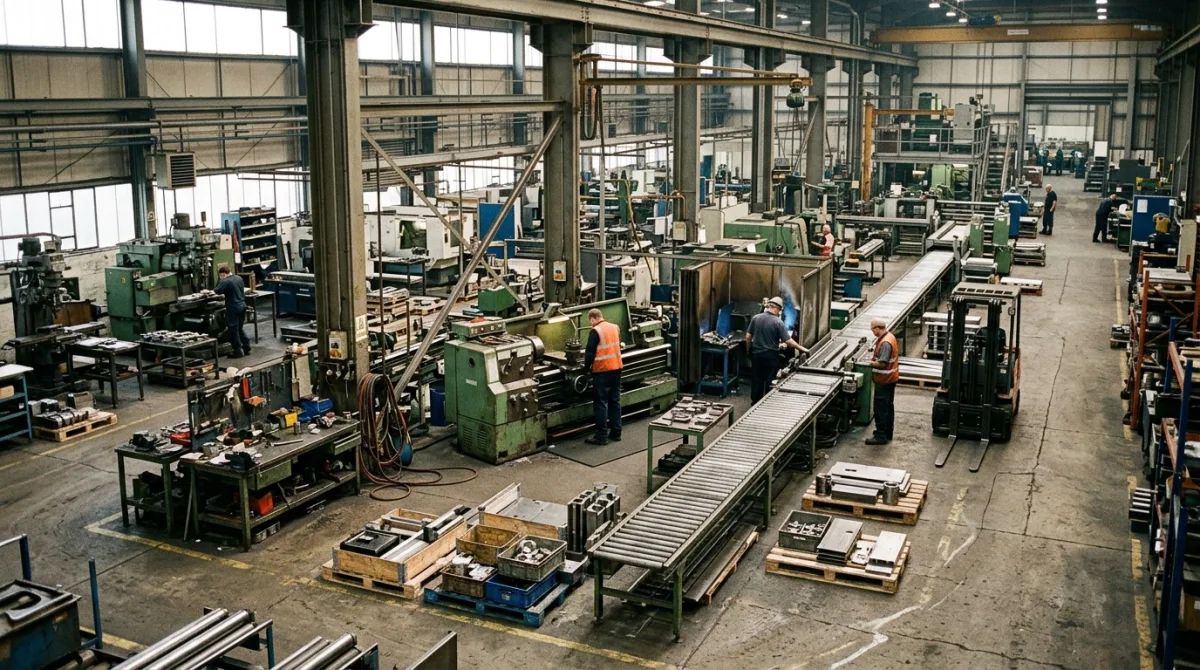
Manufacturing Sector Grapples with Mounting Labour Costs
Manufacturing firms across the United Kingdom are increasingly reporting significant strain on their profitability due to persistent upward pressure from labour expenses. This development is becoming evident in recent published financial statements, interim reports, and preliminary earnings disclosures from companies within the sector.
The cumulative effect of these rising costs is forcing many manufacturers to undertake a critical re-evaluation of their operational strategies and long-term investment plans.
How Rising Costs Emerged
The current situation has evolved from a confluence of factors over the past few years. Initially, the manufacturing sector faced acute labour shortages following broader economic shifts and changes in worker mobility.
This scarcity was exacerbated by robust competition from other industries, which began offering more attractive remuneration packages to secure talent. Subsequently, widespread inflationary pressures across the economy led to increased demands for higher wages, as employees sought to maintain their real purchasing power.
Furthermore, successive increases in the national minimum wage and national living wage rates have directly impacted the cost base for businesses employing a significant proportion of entry-level or lower-paid staff. These statutory adjustments ripple through the pay scales, influencing wages across various experience levels within manufacturing operations.
Concurrently, the need to address specific skill gaps within a rapidly evolving industrial landscape has necessitated greater investment in training and upskilling programmes, adding to the overall labour expenditure. The reduced availability of skilled workers from overseas, attributed to recent policy changes, has further tightened the domestic labour pool, limiting options for manufacturers seeking to fill critical roles and driving up the cost of retaining existing staff.
Factors Shaping the Outcome
The ability of manufacturing firms to navigate this landscape will largely depend on several key factors, each involving distinct trade-offs.
- Automation adoption: The speed and scale at which manufacturers choose to invest in advanced automation technologies will be crucial, involving substantial upfront capital outlay versus long-term operational savings and potential job displacement.
- Supply chain renegotiation: Firms' capacity to renegotiate terms with both their upstream suppliers and downstream customers is vital, often balancing maintaining relationships against protecting profit margins.
- Productivity improvements: Implementing lean manufacturing principles and process optimisation aims to generate more output from the same or fewer labour hours, requiring investment in training and careful management of potential workforce resistance.
- Pricing power: The extent to which manufacturers can increase the selling prices of their products without losing competitiveness is a defining factor, influenced by product uniqueness, brand strength, and market demand elasticity, particularly against international rivals.
Each of these factors presents strategic choices that will differentiate how individual companies and sub-sectors respond to the ongoing cost pressures.
Impact on Key Stakeholders
Small and Medium-sized Enterprises (SMEs)
SMEs often operate with tighter financial reserves and have less access to capital for large-scale automation projects compared to larger corporations. Their ability to absorb cost increases or wield significant pricing power in negotiations is typically more limited.
Many smaller manufacturers are reportedly experiencing a substantial erosion of their profit margins, with some indicating a decline of several percentage points over the past eighteen to twenty-four months, which directly impacts their investment capacity and growth prospects.
Labour-intensive industries
Sectors intrinsically reliant on a high proportion of manual labour, such as textiles, apparel manufacturing, food processing, and certain precision assembly operations, are facing the most acute challenges. These industries have historically operated on comparatively thinner margins, making them highly sensitive to even incremental increases in wage bills.
Financial reports from companies in these segments frequently highlight labour cost increases as a primary factor in reduced profitability, with some firms reconsidering their domestic production footprint.
Consumers
Ultimately, a portion of the increased manufacturing costs is likely to be passed on to consumers in the form of higher prices for finished goods. This ripple effect can be observed across a broad spectrum of products, from household appliances and automotive components to processed foodstuffs and construction materials.
Such price adjustments, which tend to materialise over several quarters, contribute to broader inflationary pressures and can impact household discretionary spending and overall economic stability.
Manufacturing workforce
While higher wages initially benefit individual employees, the broader pressure on manufacturing margins could lead to complex outcomes for the workforce. Companies facing sustained margin compression may respond by slowing down hiring, moderating future wage growth, or in some instances, accelerating investment in automation that could reduce the demand for certain types of manual labour.
Industry bodies have projected a modest contraction in manufacturing employment in specific sub-sectors over the medium term, particularly where automation provides a viable alternative to human labour.
A Counter Perspective
While the narrative of mounting pressure on manufacturing margins due to labour costs is prevalent, a counter-argument suggests that this period represents a necessary, albeit challenging, market correction rather than an existential threat. This perspective posits that the current dynamics are largely a rebalancing act after a prolonged period of relatively stagnant real wages for many workers.
The current pressure on manufacturing margins from labour costs is a cyclical adjustment, not a fundamental crisis, and will ultimately drive beneficial innovation and efficiency.
Proponents of this view argue that increased labour costs compel manufacturers to become more efficient, invest in productivity-enhancing technologies, and focus on higher-value products and processes. They contend that this natural market force will lead to a more robust and sustainable manufacturing sector in the long run, even if some less efficient firms face difficult decisions in the short term. Higher wages could also contribute to improved worker morale and a stronger domestic consumer base, indirectly supporting economic activity.
Uncertainties Ahead
The long-term impact on global competitiveness
One significant unknown factor is the precise long-term impact of these sustained labour cost pressures on the global competitiveness of UK manufacturing. It remains uncertain how domestic producers will fare against international counterparts, particularly those operating in economies with significantly lower labour costs or those that have already achieved a higher degree of automation. The extent to which these pressures will ultimately drive strategic decisions towards offshoring production, or conversely, stimulate a renewed focus on high-value, specialised domestic output and advanced manufacturing techniques, is still an open question for many firms and industry observers.
Observable Signals for the Future
Investors and market analysts will be closely monitoring several observable signals to gauge the evolving response to these pressures. A key indicator will be shifts in capital expenditure announcements by manufacturing firms, particularly those targeting automation, robotics, and advanced process efficiency improvements, which will reflect the industry's long-term strategy to mitigate rising labour costs.
Further observable signals include any notable changes in supply chain configurations, such as an increased emphasis on near-shoring or the strategic diversification of suppliers, as companies seek to build resilience and manage their cost base more effectively. The evolution of job vacancy rates and hiring trends within various segments of the manufacturing sector, especially for skilled technical roles, will provide insight into the demand for labour and the pace of automation adoption.
Additionally, close attention will be paid to any published adjustments in average selling prices across a range of manufactured goods categories, as firms adapt their pricing strategies in response to margin compression. The forthcoming financial results from publicly listed manufacturing companies over the next several reporting periods will offer clearer, quantifiable evidence of how these cost pressures are translating into profit figures, investment decisions, and ultimately, investor returns.
Reader responses
Responses are read by the desk before they appear. A factual correction reaches us fastest here, and is made on the article itself with a dated note.
No responses on this report yet.