Global logistics costs reshape enterprise operating budgets
Rising global logistics costs are forcing businesses to re-evaluate and restructure their operating budgets, impacting profitability and strategic planning across various sectors.
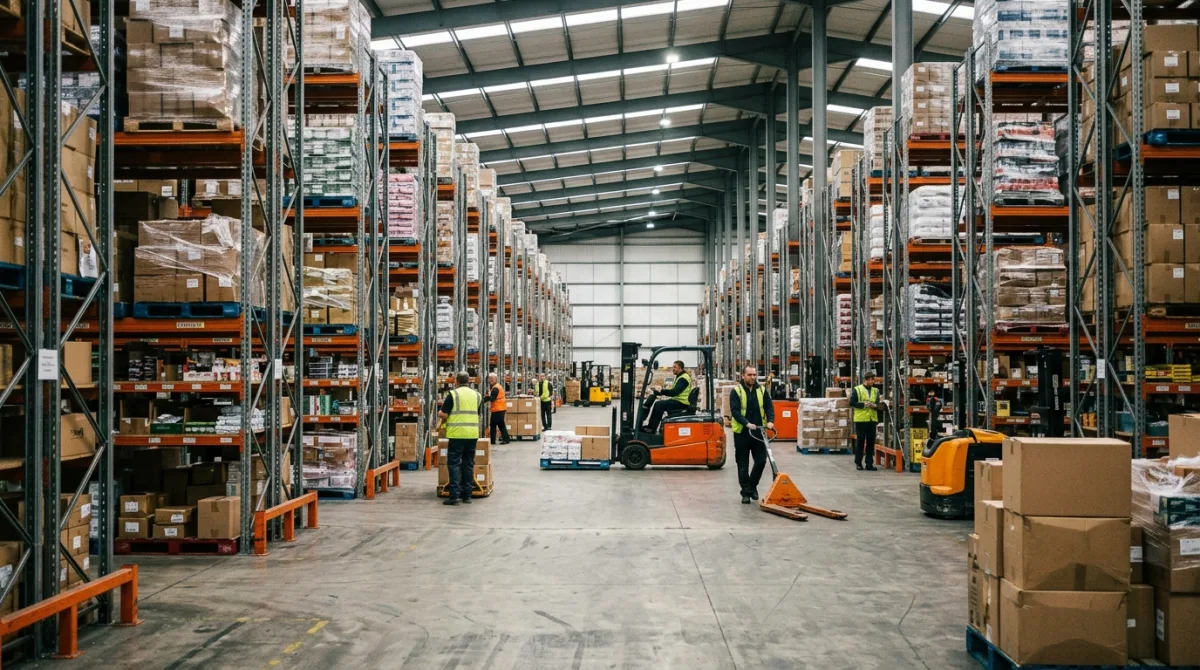
Shifting Operational Priorities
Businesses globally are facing a sustained increase in the proportion of their operating budgets allocated to logistics, reflecting a fundamental shift in supply chain economics that has become increasingly evident in recent financial disclosures. This adjustment signals a significant reprioritisation of expenditure, moving resources away from other operational areas to absorb rising transport, warehousing, and inventory management costs. The impact is widespread, affecting diverse sectors from manufacturing and retail to technology and professional services, as companies contend with a new fiscal landscape.
This reallocation of capital expenditure and operational spending is not merely a short-term reaction to market volatility but rather a more ingrained adaptation to evolving global trade conditions. Financial reports over the past two years have consistently highlighted elevated freight costs and extended lead times as primary contributors to pressures on gross margins. Boards and finance departments are now embedding these higher baseline costs into long-term strategic planning, influencing investment decisions and product pricing across various industries.
The Genesis of Elevated Costs
The current recalibration of enterprise operating budgets has emerged from a sequence of interconnected global events and market dynamics. Initially, the widespread disruptions caused by the global pandemic exposed deep-seated fragilities within previously optimised, lean just-in-time supply chains, leading to unprecedented port congestion, container shortages, and significant labour shortfalls in freight handling across key logistical hubs.
Following this, a period of heightened and unpredictable consumer demand volatility made accurate inventory forecasting considerably more challenging for many businesses. This necessitated a strategic move towards holding larger buffer stocks, thereby increasing warehousing costs and the capital tied up in inventory. Simultaneously, geopolitical realignments began to exert pressure on established trade routes, leading to longer transit times, the need for alternative, often more expensive, shipping lanes, and higher insurance premiums for cargo traversing certain regions.
Global energy markets then experienced significant and prolonged price fluctuations, directly escalating fuel costs across all modes of transport—sea, air, road, and rail—which form a substantial component of overall logistics expenditure. Concurrently, labour cost inflation became a pervasive issue, with wages for logistics personnel, including lorry drivers, port workers, and warehouse staff, rising in many economies due to persistent shortages, increased competition for skilled workers, and evolving industrial relations. Finally, new environmental regulations introduced in various jurisdictions are adding compliance costs, particularly for emissions reduction technologies and sustainable practices within transport fleets, further contributing to the upward trajectory of logistics expenses.
Drivers of Future Outcomes
Several critical factors are now determining how individual enterprises navigate and adapt to the persistent shifts in global logistics costs. Each involves complex trade-offs that influence long-term financial health and market positioning.
- Strategic Sourcing: Companies are weighing the cost benefits of historically single-source, low-cost suppliers against the enhanced resilience and reduced risk offered by geographically diversified networks, often accepting higher unit costs for greater supply chain stability.
- Inventory Management: The intricate balance between holding sufficient buffer stock to mitigate potential supply chain disruptions and the substantial capital tied up in inventory, alongside associated warehousing and insurance costs, directly dictates operational flexibility and responsiveness to market changes.
- Technology Adoption: Investment in advanced analytics, real-time tracking systems, and automated warehouse solutions provides greater transparency and predictive capabilities across the entire supply chain, potentially reducing waste and improving routing efficiency, though requiring significant upfront capital expenditure.
- Geographic Relocation: The ongoing evaluation of lower manufacturing labour costs in distant regions against the reduced transport times, simplified customs procedures, and diminished carbon footprint achievable through nearshoring or reshoring production sites profoundly influences long-term investment and supply chain architecture.
These decisions are not made in isolation but are often interconnected, with a move towards, for example, more diversified sourcing potentially reducing the need for extensive buffer stocks, or investment in technology enabling more efficient inventory management across a broader supplier base. The strategic choices made in these areas will define competitive advantage in a landscape where logistical efficiency is increasingly paramount.
Impact on Key Business Groups
Manufacturers and Distributors
These sectors, particularly those with complex global component sourcing requirements or extensive multi-country distribution networks, have experienced the most pronounced and immediate impact on their cost of goods sold. Many manufacturers have consistently reported a year-on-year increase in inbound freight expenses over the past two years, with some seeing these costs rise by a substantial share of their total operating expenditure, significantly compressing their gross profit margins. The inherent lag between rising logistics costs and the ability to implement corresponding price adjustments in final products has created considerable financial strain.
For distributors, the challenge extends acutely to outbound logistics, where prevailing consumer expectations for rapid and often free delivery directly collide with persistently rising fuel, labour, and packaging costs. This dynamic has compelled a comprehensive re-evaluation of established delivery models, pricing structures, and even geographic service areas. While larger distribution firms have, in many instances, absorbed a portion of these increased costs to maintain market share and customer loyalty, smaller entities have frequently been compelled to pass on these expenses, affecting their competitive pricing and overall market position, sometimes leading to a loss of volume.
A Cyclical Perspective
While the observable shift towards consistently higher logistics costs in enterprise operating budgets is well-documented, some economic analysts and industry observers contend that the current focus on these expenses might be overstating their long-term, permanent impact on overall financial health. They suggest that historical periods have also witnessed significant fluctuations and spikes in shipping and transport costs, which have subsequently stabilised or even reversed course as market conditions adjusted and new efficiencies emerged.
The current elevated logistics costs are a cyclical phenomenon, not a permanent structural change, and companies that overreact risk underinvesting in other critical areas of growth and innovation.
This alternative perspective posits that ongoing supply chain adjustments, combined with the continuous development and adoption of technological innovations, alongside a potential easing of geopolitical tensions and global energy prices, could collectively contribute to a normalisation of logistics costs. Consequently, businesses that delay or curtail strategic investment in other crucial areas, such as research and development, market expansion, or talent acquisition, solely in favour of mitigating current logistics pressures, might find themselves at a significant competitive disadvantage when broader market conditions inevitably shift again, potentially missing opportunities for long-term growth.
Unresolved Questions on Durability
The durability of current supply chain reconfigurations
It remains uncertain how many of the strategic and operational shifts initiated by enterprises to manage escalating logistics costs will ultimately become permanent fixtures of their business models. Decisions such as extensive nearshoring, the establishment of dual-sourcing strategies, or significant investments in regional distribution hubs represent substantial capital commitments, requiring comprehensive operational overhauls and long-term planning. The key open question is whether these fundamental changes in supply chain architecture will persist beyond the immediate pressures that prompted them, or if firms will gradually revert to previous, leaner, and often more geographically dispersed models once global trade conditions potentially stabilise or even revert. The answer will profoundly influence future global trade patterns, industrial geographies, and the long-term resilience of international commerce.
Forthcoming Observable Signals
Observable signals indicating the future trajectory of global logistics costs and their influence on enterprise budgets will emerge through several key channels. We can expect to see further corporate announcements detailing increased capital expenditure on automated warehousing facilities, advanced inventory management systems, and integrated logistics software platforms, reflecting a sustained commitment to technological solutions. Additionally, any increased merger and acquisition activity within the third-party logistics sector, as companies seek to consolidate operations or gain greater efficiencies of scale, would also signify ongoing structural adjustments and market consolidation in response to these pressures.
Furthermore, shifts in global manufacturing investment patterns, particularly the allocation of new factory builds or significant expansion projects to different geographic regions, will provide crucial insight into the long-term commitment to diversified and regionalised supply chains, moving beyond initial reactive measures. The evolving regulatory landscape regarding carbon emissions in transport will also continue to influence fleet investment decisions, particularly concerning sustainable fuels and electric vehicles, thereby affecting operational compliance costs and the overall cost base for logistics. These indicators, taken together, will offer a clearer picture of whether the current cost environment represents a lasting transformation or a temporary recalibration within global trade.
Reader responses
Responses are read by the desk before they appear. A factual correction reaches us fastest here, and is made on the article itself with a dated note.
No responses on this report yet.