Supply chain re-routing increases freight expenditure for firms
Firms are experiencing a rise in freight expenditure due to necessary supply chain re-routing. Geopolitical shifts and disruptions necessitate new logistical pathways, directly impacting operational costs for businesses across various sectors.
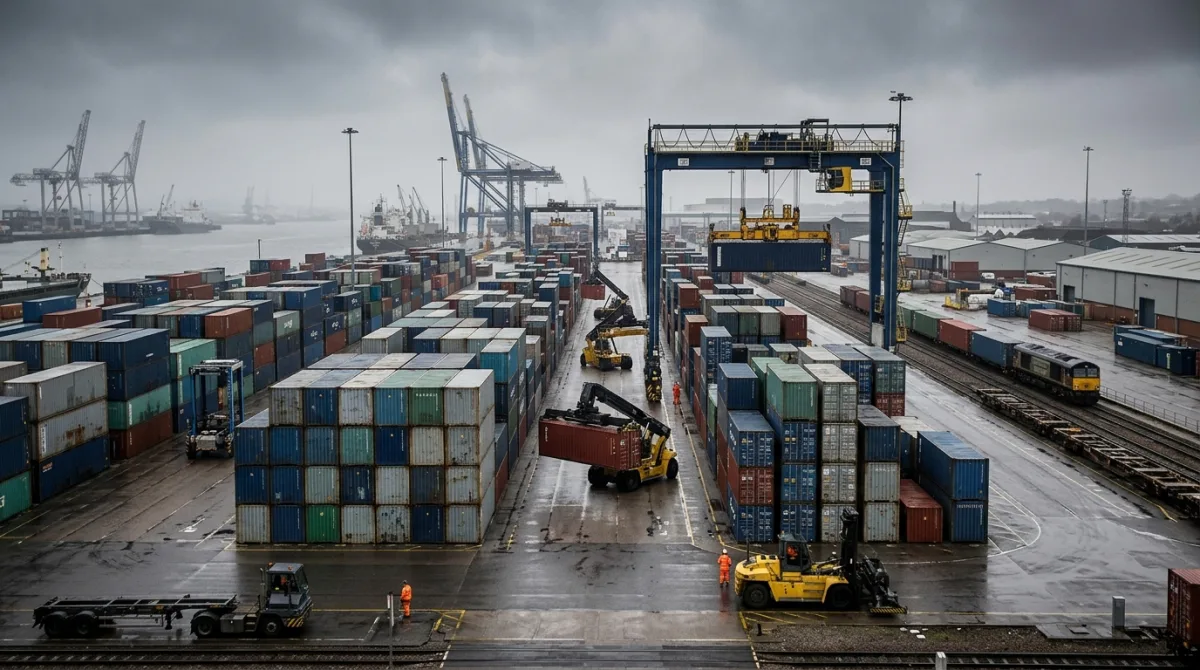
Firms Face Higher Logistics Bills Amid Global Route Shifts
Firms across numerous sectors are reporting a measurable and sustained rise in their freight expenditure, directly attributable to the necessary re-routing of global supply chains. This increase is manifesting in higher operational costs and reduced profit margins, as companies absorb or selectively pass on the additional charges to consumers. The shift represents a significant recalibration of established logistics networks, moving away from previously cost-optimised routes towards more resilient, albeit more expensive, alternatives.
This development is prompting a widespread re-evaluation of long-term sourcing and distribution strategies, with implications for capital expenditure and competitive positioning. The financial impact is now clearly visible in quarterly earnings reports, affecting a diverse range of industries.
How Geopolitical Shifts Sparked Logistics Recalibration
The initial catalyst for this widespread re-evaluation of shipping lanes stemmed from a series of global disruptions, including heightened geopolitical tensions and critical choke point closures. These events rendered traditional maritime routes, such as passages through certain canals or straits, either unreliable, significantly delayed, or entirely inaccessible for extended periods. Consequently, businesses faced escalating risks of delivery interruptions and inventory shortages, prompting an urgent need for contingency planning beyond standard operational adjustments.
Faced with these immediate challenges, many companies proactively began exploring and implementing alternative shipping paths to maintain their delivery schedules and ensure supply continuity. This often involved diverting vessels around entire continents, adding thousands of miles to journeys, or shifting cargo to different intermodal transport solutions, such as increased reliance on air freight for time-sensitive goods. The simultaneous adoption of these longer, more circuitous routes by numerous firms across diverse industries created an immediate and considerable surge in demand for the available capacity on these new corridors. This concentrated demand, coupled with existing global shipping capacity constraints and increased insurance premiums for certain areas, exerted significant upward pressure on freight rates along these revised pathways. What began as temporary contingency planning has gradually evolved into more permanent adjustments to supply chain architecture, as companies increasingly prioritise resilience and predictability over the lowest immediate transport cost in their strategic planning.
Factors Shaping Freight Cost Exposure
The commercial ramifications of this re-routing are not uniform, with several key factors deciding the eventual outcome for individual firms and their financial accounts. Businesses must weigh various trade-offs as they adapt to the evolving logistics landscape.
- Geographic spread: The extent of a firm's global reach and the specific origin and destination points of its goods directly influences the impact of re-routing. Companies heavily reliant on disrupted major maritime routes face more substantial re-routing costs than those with more localised supply chains or access to diverse regional shipping options.
- Inventory strategy: Firms operating with "just-in-time" inventory models are inherently more vulnerable to transit delays and thus more compelled to utilise faster, albeit more expensive, re-routed options to prevent stockouts. Conversely, those maintaining larger safety stocks have greater flexibility to choose slower, potentially less costly, alternative routes but incur higher inventory holding costs.
- Contractual terms: The nature of existing freight contracts plays a significant role in immediate cost exposure. Companies locked into long-term fixed-rate agreements may temporarily be shielded from spot market price spikes, while those on shorter-term contracts or relying heavily on spot rates are immediately exposed to rising market prices for re-routed journeys.
- Product value: The cost of freight as a proportion of a product's overall value varies considerably. High-value, low-volume goods can absorb increased shipping costs more readily without drastically impacting their retail price or margin, whereas low-value, high-volume commodities often see freight represent a substantial share of the final cost, making them highly sensitive to rate increases.
These interconnected factors combine to determine the specific financial pressure exerted on a company, influencing decisions on pricing, sourcing, and capital investment in logistics infrastructure.
Industries Grapple with Rising Transport Bills
Global Manufacturers
Manufacturing firms with complex, multi-tiered global supply networks, especially those sourcing components from diverse geographical locations for assembly in major production hubs, are bearing a significant portion of the increased freight expenditure. These companies often deal with multiple legs of transport, from raw materials to finished goods, each now subject to higher costs due to extended routes and increased demand for capacity. For some manufacturers, logistics costs, which historically represented a single-digit percentage of revenue, have seen an uplift of a substantial share, thereby compressing gross margins over the past two reporting periods.
This sustained pressure has necessitated a strategic re-evaluation of production locations, sourcing strategies, and distribution networks for the medium term. Decisions are being made about reshoring or nearshoring certain operations, weighing the higher initial capital expenditure against the potential for reduced, more predictable future transport costs and enhanced supply chain resilience.
Retail and Consumer Goods Companies
Retailers and consumer goods companies, particularly those importing finished goods directly for sale, face direct cost pressures that filter through to their cost of goods sold. The higher cost of bringing products to market has been observed across a wide array of product categories, ranging from electronics and home furnishings to apparel and seasonal merchandise. This situation challenges established pricing models and promotional strategies.
While larger retail entities may possess greater leverage to negotiate preferential rates with shipping partners due to volume, the overall market trend still means that many are either absorbing the increased costs, thereby diminishing their operating profit, or passing a portion onto consumers through higher retail prices. This latter approach carries the risk of impacting sales volumes and consumer demand over multiple quarterly cycles, influencing market share and competitive positioning.
Temporary Spike or Enduring Shift?
While the immediate impact of supply chain re-routing on freight expenditure is clearly evident in recent financial reporting, some market analysts argue that the current narrative overstates the long-term structural shift. They suggest that the current elevated costs are primarily a temporary market correction rather than a permanent recalibration of global logistics infrastructure and pricing. This perspective challenges the idea of enduringly higher freight costs.
The current elevated freight costs are primarily a transient response to specific geopolitical events, and as these normalise, a return to more cost-efficient, pre-disruption routing patterns and rates is expected.
This counter-argument posits that the fundamental economic drivers favouring globalised, optimised supply chains, such as economies of scale in manufacturing and access to diverse markets, remain powerful. Companies will inherently gravitate back towards the most efficient and direct routes once immediate risks subside, rather than permanently embedding higher-cost, more circuitous paths into their operational models, especially given sustained pressure on consumer prices and the pursuit of competitive advantage. The capital expenditure required to permanently reconfigure supply chains away from established efficiencies is also a significant barrier to such a lasting shift.
Uncertainty Over Future Freight Cost Trajectories
The Duration of Elevated Costs
The foremost uncertainty revolves around precisely how long firms will be compelled to endure the elevated freight costs, and whether these will eventually settle at a new, permanently higher baseline or gradually revert closer to historical averages. This trajectory depends heavily on the resolution of existing geopolitical flashpoints that have triggered much of the re-routing, the long-term stability and security of emerging alternative trade routes, and the pace of new investment in global shipping capacity. None of these factors currently possess clear timelines for resolution or completion. Furthermore, the adaptability of existing global trade infrastructure to the sustained demands of these re-routed patterns is an open question, with potential for either further bottlenecks if capacity remains constrained or, conversely, new efficiencies to emerge as the system adjusts.
Signals to Watch in Future Reporting
Looking ahead, companies' upcoming quarterly and annual financial statements will offer further clarity on the ongoing impact of re-routing on their profit margins and the overall cost of goods sold. Investors and analysts will specifically be scrutinising disclosures regarding logistics expenses as a percentage of revenue and any adjustments to forward guidance.
Concurrently, industry reports from major international shipping lines, port authorities, and freight forwarders will provide crucial insights into whether demand for specific re-routed corridors remains strong or begins to normalise. Key observable signals will include changes in vessel utilisation rates on these alternative routes, shifts in shipping container availability, and any reported adjustments to global fleet deployment strategies, all of which will offer indications regarding the stability and future direction of current freight prices.
Reader responses
Responses are read by the desk before they appear. A factual correction reaches us fastest here, and is made on the article itself with a dated note.
No responses on this report yet.