Precision tools enhance carbon sequestration measurement accuracy
New precision tools are improving the accuracy of carbon sequestration measurement. This development allows for a more reliable assessment of ecosystem services and climate change mitigation strategies.
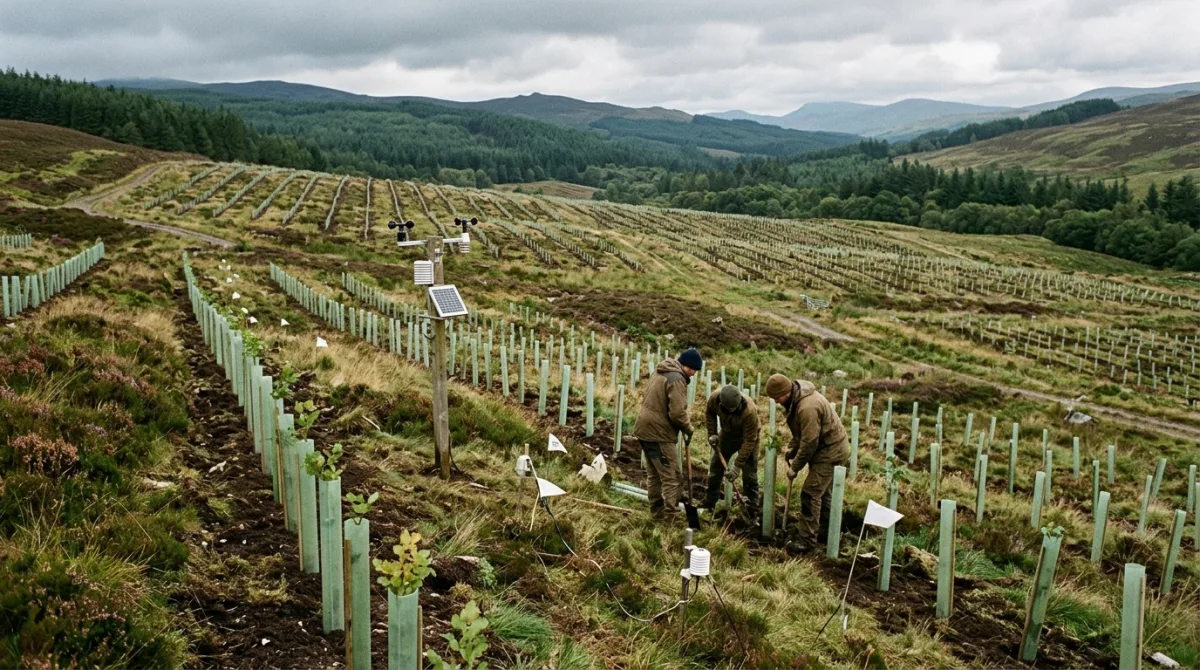
Enhanced Measurement Tools Boost Carbon Sequestration Verification
New and refined precision tools are significantly improving the accuracy with which sequestered carbon is measured, addressing a longstanding challenge in climate mitigation efforts. This development promises to provide more reliable data for carbon markets and national greenhouse gas inventories.
The advancements encompass a range of technologies, including high-resolution satellite imagery, advanced ground-based sensor networks, and sophisticated computational models that integrate diverse data streams. These tools collectively reduce the uncertainty associated with quantifying carbon stored in natural and engineered systems, from forests and agricultural soils to emerging carbon capture projects.
Tracing the Path to Greater Accuracy
The drive for more precise carbon measurement stems from the increasing global reliance on carbon sequestration as a key strategy to meet climate targets. Early efforts to quantify carbon uptake in ecosystems often relied on broad estimations and periodic manual sampling, leading to significant margins of error that undermined confidence in reported figures.
As carbon markets matured and national commitments under agreements like the Paris Agreement solidified, the demand for verifiable and robust data intensified. This pressure spurred investment in research and development, particularly in remote sensing capabilities and in-situ monitoring technologies that could offer continuous, wide-area coverage.
Over the past decade, advancements in sensor miniaturisation, data processing algorithms, and machine learning have converged, enabling the creation of tools capable of differentiating subtle changes in biomass, soil carbon content, and atmospheric CO2 concentrations with greater fidelity. This technological leap represents a direct response to the economic and environmental imperative for clearer accountability in carbon removal projects.
Factors Shaping the Efficacy of Precision Measurement
The practical impact of these advanced measurement tools hinges on several interconnected factors, each presenting its own set of trade-offs and considerations.
- Deployment Cost: The initial capital outlay for high-resolution satellite subscriptions, sophisticated ground sensor arrays, or advanced modelling software can be substantial, often representing a significant fraction of a project's overall budget, balancing upfront expense against long-term verification savings.
- Scalability Challenges: While effective in pilot projects or specific sites, extending these precision methods across diverse and vast landscapes, such as millions of hectares of agricultural land or remote forest regions, introduces complexities related to data collection logistics and computational demands.
- Data Standardisation: Integrating disparate data sources from various technologies and ensuring their comparability across different projects and geographies remains a considerable hurdle, requiring agreed-upon protocols for data acquisition, processing, and reporting.
- Regulatory Acceptance: The adoption and acceptance of these new methodologies by carbon registries, national reporting bodies, and international frameworks often lag technological development, creating a period of uncertainty regarding their full market and policy utility.
Effectively navigating these factors will determine how widely and rapidly precision carbon measurement is integrated into global climate action. Each element requires careful consideration of investment, technical integration, and institutional alignment to realise the full potential of these tools.
Impact on Key Stakeholders
Landowners and Farmers
Thousands of landowners and farmers across the UK and beyond stand to gain from more accurate carbon measurement, particularly those engaged in emerging carbon farming schemes. Increased precision in quantifying soil carbon sequestration or tree growth could lead to more transparent and potentially higher valuations for carbon credits generated on their land.
This enhanced accuracy can reduce the risk of disputes over claimed sequestration volumes and provide clearer financial incentives for adopting sustainable land management practices over project durations typically spanning 10 to 30 years. However, the initial investment in monitoring technology or the costs associated with third-party verification could represent a new financial burden.
Carbon Project Developers and Investors
For companies developing and investing in carbon sequestration projects, from afforestation to direct air capture, these tools offer a significant reduction in measurement risk. Greater certainty in reported carbon removals translates directly into higher confidence for investors and potentially more stable carbon credit prices in both voluntary and compliance markets.
Projects spanning hundreds or thousands of hectares, often involving commitments over several decades, can now rely on more robust data to secure financing and verify outcomes. This shift helps to de-risk long-term investments, potentially attracting a broader pool of capital into climate solutions.
Governments and Regulatory Bodies
National governments and international regulatory bodies are directly affected by the improved accuracy, as it strengthens the integrity of national carbon inventories and reporting under global climate agreements. This allows for a more reliable assessment of progress towards decarbonisation targets and the effectiveness of land-use policies.
The ability to independently verify sequestration claims with greater precision provides a stronger basis for policy design, resource allocation, and the enforcement of environmental regulations. Over the coming years, this data will be crucial for guiding billions of pounds in public and private investment into climate resilience and mitigation infrastructure.
The Challenge of Project Permanence
While the improved accuracy of measuring carbon sequestration represents a significant step forward, it does not fully resolve the inherent challenge of ensuring the long-term permanence of carbon removal projects. The ability to precisely quantify carbon stored at a specific moment does not guarantee that this carbon will remain sequestered for centuries, particularly in biological systems susceptible to natural disturbances or land-use changes.
Even with highly precise measurements, the fundamental problem of how to guarantee the longevity of sequestered carbon against future risks remains largely unaddressed, potentially overstating the true climate benefit.
Critics argue that focusing solely on measurement accuracy might divert attention and resources from the more complex and costly task of developing robust mechanisms to ensure permanence, such as long-term monitoring, insurance, or buffer pools, which are critical for the credibility of carbon credits over their full lifecycle.
Unresolved Questions on Global Standardisation
How will global measurement standards evolve?
A key unanswered question centres on the emergence and widespread adoption of unified global standards for these advanced carbon measurement methodologies. While individual projects and countries may implement highly precise tools, the lack of universally accepted protocols for data collection, processing, and verification could hinder the interoperability and comparability of carbon credits across international markets. This includes defining acceptable uncertainty thresholds, reporting frequencies, and the integration of diverse data types from satellite, aerial, and ground-based sensors. The mechanisms for updating existing verification frameworks, or creating new ones, to accommodate these rapidly evolving technologies are still in development, leading to potential fragmentation in how different carbon removal initiatives are assessed and valued globally.
Observable Signals for Future Development
Several observable signals will indicate the ongoing integration and impact of these precision measurement tools. We can expect to see an increase in dedicated research and development funding directed towards companies specialising in M&R (Measurement & Reporting) technologies, particularly those offering integrated solutions for diverse ecosystems.
Furthermore, regulatory bodies and established carbon registries are likely to initiate public consultations or pilot programmes aimed at updating existing verification methodologies to explicitly incorporate these advanced measurement capabilities. Any shift in the premium or discount applied to carbon credits based on the rigour of their measurement and verification protocols would also serve as a strong market signal of their growing influence.
Reader responses
Responses are read by the desk before they appear. A factual correction reaches us fastest here, and is made on the article itself with a dated note.
No responses on this report yet.