Revised climate adaptation financing alters project viability
Changes to climate adaptation financing are impacting the feasibility of various projects, with implications for their implementation and long-term success. Project developers and stakeholders are reassessing financial models.
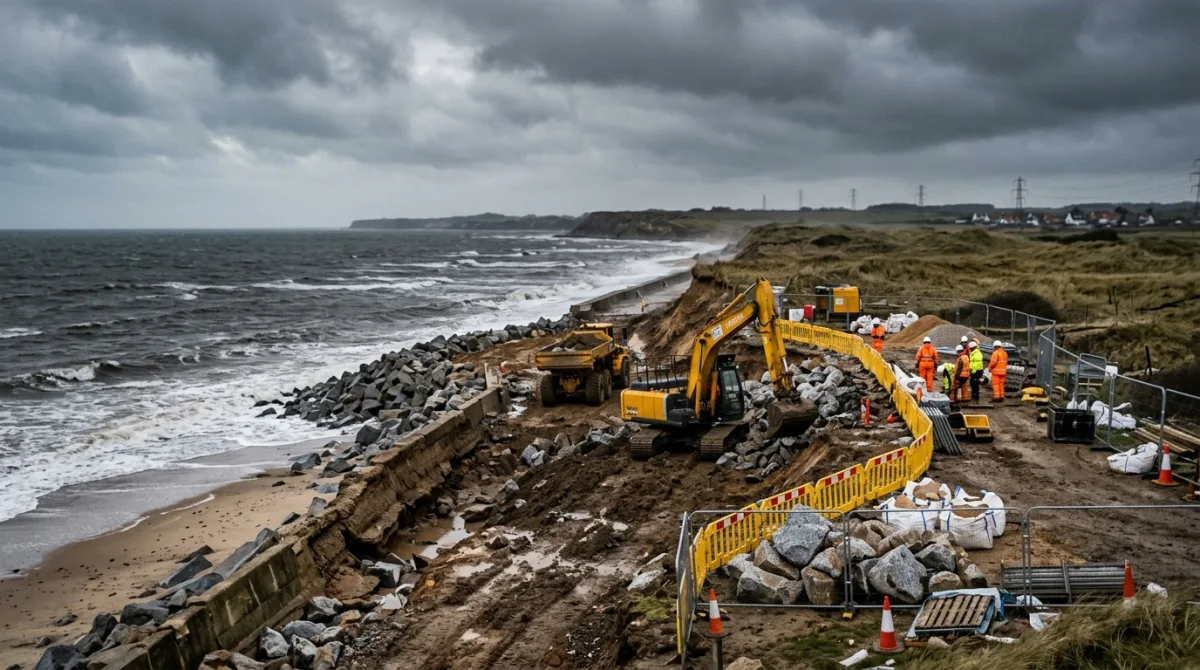
Global Adaptation Funding Realigned
International mechanisms for financing climate adaptation projects have undergone significant revisions, directly altering the financial viability and engineering specifications required for numerous initiatives designed to enhance resilience against climate impacts.
This re-evaluation of funding criteria and risk assessment frameworks means that projects previously considered feasible may now face substantial hurdles in securing the necessary capital, impacting a wide array of infrastructure and environmental protection schemes globally.
Evolution of Climate Financing
The journey to the current financing landscape began with initial pledges from industrialised nations, primarily channelled through multilateral development banks (MDBs) and dedicated climate funds, aiming to assist vulnerable countries in adapting to climate change.
Over time, the demand for adaptation projects escalated dramatically, far outstripping the available capital and leading to calls for more efficient and scalable funding models. Concerns mounted regarding the disbursement speed, the balance between grants and loans, and the long-term sustainability of many funded initiatives.
A significant shift gained momentum towards leveraging private sector investment and prioritising "bankable" projects that could demonstrate clearer financial returns or robust cost-benefit analyses. This was partly driven by the sheer scale of investment required and the limitations of public sector budgets alone.
Recent international climate dialogues culminated in a consensus to refine the existing financial architecture, leading to the formal adoption of revised eligibility criteria and risk assessment methodologies that now govern a substantial share of global adaptation funding.
Factors Shaping Project Outcomes
The updated financial framework introduces several critical factors that now determine the approval and successful implementation of climate adaptation projects, often creating new trade-offs for project developers and governments.
- Revised Risk Metrics: New models for quantifying climate-related physical and transition risks directly influence the perceived financial viability of projects, often increasing the cost of capital for those in perceived high-risk zones or areas susceptible to future climate shocks.
- Long-term Resilience Emphasis: A greater emphasis on demonstrating enduring resilience and long-term protective benefits means that projects with longer payback periods or more diffuse societal and environmental benefits may struggle to attract short-term, return-focused capital.
- Local Contribution Requirements: The increased expectation for local governments or implementing entities to contribute a higher percentage of project costs has created significant funding gaps for regions with constrained fiscal capacity, particularly for large-scale engineering works.
- Technological Provenance: A preference for proven, scalable adaptation technologies and engineering solutions over novel or pilot schemes reduces support for innovative but untested approaches, even if they offer potentially superior long-term benefits.
These factors collectively steer investment towards projects that can demonstrate clear, measurable impacts within defined timelines and financial parameters, potentially overlooking essential but less financially attractive interventions. The emphasis on robust measurement and verifiable outcomes now dictates engineering design choices and material specifications.
Impact on Vulnerable Nations
Developing Nations and Small Island States
Many developing nations and small island states are profoundly affected by these changes, as they rely heavily on international adaptation financing to protect their populations and infrastructure from escalating climate impacts. Projects addressing critical issues such as coastal erosion, freshwater scarcity, and agricultural resilience, which were previously assessed as viable, may now be deemed too risky or expensive under the revised terms.
This shift could lead to a substantial reduction in the number of approved and implemented projects over the coming decade, or force these nations to take on higher debt burdens under less favourable financing terms. Such delays or increased financial strain could exacerbate existing vulnerabilities for millions of people, slowing the necessary upgrades to critical infrastructure and delaying the implementation of essential protective measures.
The Case Against the New Framework
A significant objection raised by various climate advocacy groups and development economists is that the revised financing framework, while ostensibly aiming for greater efficiency and accountability, inadvertently places an undue burden on the most vulnerable communities and could critically slow down urgent adaptation efforts where they are needed most.
Critics argue that a rigid focus on "bankability" for climate adaptation projects is fundamentally misaligned with the core humanitarian and equity principles often cited as driving global climate action. Many essential protective measures, such as large-scale mangrove restoration for coastal defence, early warning systems for extreme weather events, or community-based water management schemes, do not generate direct financial returns but are absolutely critical for human safety, livelihoods, and ecosystem health.
The revised financing mechanisms risk prioritising financial returns over the fundamental human need for protection against the accelerating impacts of climate change.
This approach, it is contended, risks widening the existing adaptation gap, leaving communities disproportionately exposed to the intensifying impacts of climate change, even as global commitments to support adaptation are frequently reiterated. It effectively shifts a greater proportion of the financial risk burden from international funders to local populations and their national governments, who often possess the least capacity to absorb such risks.
Uncertainty in Global Adaptation Targets
The long-term impact on global adaptation targets
It remains to be fully determined whether the revised approach to climate adaptation financing will ultimately accelerate or impede the overall progress towards global climate adaptation goals. While proponents assert that it will streamline funding towards more effective and sustainable projects by demanding robust engineering and economic planning, the potential for significant delays or outright cancellations of critical initiatives in highly vulnerable areas due to increased hurdles represents a substantial unknown. The aggregate effect on global resilience and the pace of protective infrastructure development remains an open question, particularly concerning how this shift affects the speed of project implementation in regions most acutely in need of immediate intervention.
Future Indicators and Responses
Stakeholders will closely monitor several observable signals to gauge the practical implications of these financing changes. Key indicators will include the initial project approval rates under the new criteria, particularly noting any significant decline in the number of funded adaptation initiatives within highly vulnerable regions. The emergence of new financial instruments or blended finance models specifically designed to bridge identified funding gaps will also be a crucial development to observe.
Future international climate conferences and associated intergovernmental meetings are expected to be forums where the practical implications of these revisions are debated, potentially leading to calls for further adjustments or the establishment of supplementary funds to address any evident shortfalls. The responses from national governments, multilateral institutions, and the private sector to this altered financial landscape will collectively shape the trajectory of global climate adaptation efforts.
Reader responses
Responses are read by the desk before they appear. A factual correction reaches us fastest here, and is made on the article itself with a dated note.
No responses on this report yet.