Supply chain realignment influences future profit forecasts
Strategic adjustments within global supply chains are increasingly impacting corporate financial projections. This realignment, driven by various market forces, is prompting revised profit forecasts across multiple sectors.
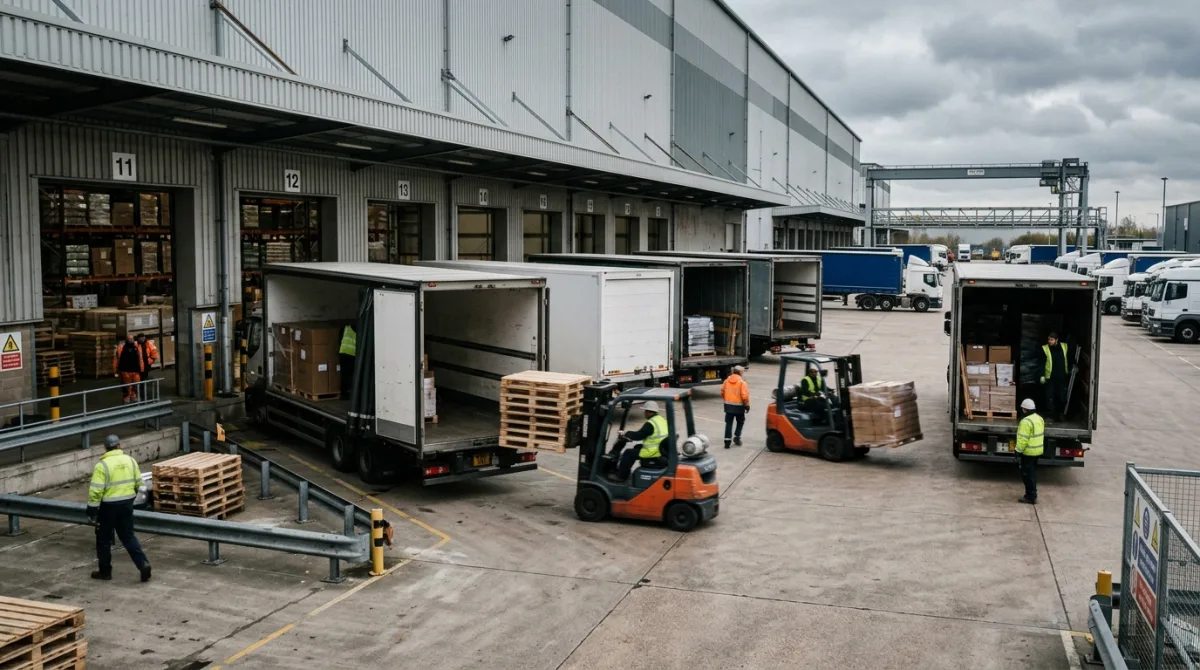
Global Operational Shifts Reshape Earnings Outlook
Companies are quietly adjusting their global supply networks, a strategic pivot now visibly beginning to feed into revised long-term profit projections across a diverse array of industrial and commercial sectors. This widespread realignment reflects a fundamental re-evaluation of the long-held balance between operational efficiency, often achieved through lean, globalised models, and the imperative for supply chain resilience. Rather than being announced as major initiatives, these shifts are emerging through discernible changes in reported capital expenditure, evolving inventory metrics, and subtle alterations in the cost of goods sold within company accounts.
Financial analysts are increasingly incorporating these deep-seated operational changes into their detailed financial models, recalibrating earnings estimates for the coming three to five years by adjusting assumptions around input costs, operational risk premiums, and future revenue stability. The cumulative effect of these individual corporate decisions is gradually reshaping expectations for aggregate industry profitability and sector-specific valuations, moving beyond immediate quarterly figures to anticipate sustained structural impacts.
Drivers of the Strategic Repositioning
The impetus for these widespread adjustments stems directly from the series of unprecedented global disruptions experienced over the past five years. A confluence of factors, including the initial widespread logistical bottlenecks, subsequent geopolitical tensions, and sudden, unpredictable shifts in consumer demand patterns, exposed profound vulnerabilities in highly optimised, lean supply chains. Businesses that had previously prioritised minimal inventory holdings and relied heavily on single-source suppliers found their production lines halted and distribution channels severely impacted by unexpected external events.
This sustained period of volatility prompted a comprehensive re-evaluation of sourcing strategies at board level, leading many firms to actively diversify their supplier base geographically and explore options for nearshoring or reshoring critical production capabilities. The pursuit of greater operational control, reduced transit times, and enhanced security of supply became a more significant strategic consideration than purely chasing the lowest possible unit cost. These long-term, capital-intensive decisions involved substantial internal reviews, detailed risk assessments, and significant capital allocation over extended periods, often quietly implemented over several financial reporting cycles.
Key Factors Influencing Profit Outcomes
The ultimate success of these supply chain realignments in positively influencing future profit forecasts hinges on several critical operational and financial factors, each presenting complex trade-offs for management.
- Labour costs: The ongoing challenge of balancing potentially lower unit production costs often found in distant overseas regions against the typically higher, yet more stable and predictable, labour expenses associated with domestic or geographically closer facilities.
- Logistics efficiency: The direct trade-off between achieving significantly reduced shipping times and lower transport costs through closer proximity to markets, offset by the potential loss of economies of scale previously enjoyed from larger, consolidated production hubs far afield.
- Inventory levels: The strategic decision to increase buffer stocks and safety inventories to enhance resilience against future disruptions, which incurs higher capital tied up in working capital and increased warehousing costs, versus the risk of stockouts and lost sales.
- Technology adoption: The substantial upfront capital expenditure required for integrating advanced automation, sophisticated data analytics platforms, and artificial intelligence tools into new or reconfigured supply chain management systems, promising long-term efficiency gains but impacting immediate financial performance.
Each of these factors represents a complex decision point for management, with direct implications for a company's underlying cost structure, operational overheads, and ultimately, its gross and net profit margins. The strategic choices made in these specific areas determine the extent to which realignment efforts translate into sustainable, measurable profit growth or merely result in a redistribution of existing cost burdens.
Impact on Key Stakeholders
Manufacturers with complex global networks
Companies operating in sectors such as automotive components, consumer electronics, specialty chemicals, and apparel, which have historically relied on intricate and geographically dispersed international supply chains, are particularly impacted. These firms often managed vast, multi-tiered networks of suppliers spanning multiple continents, meticulously optimised over decades for cost efficiency and specialised production capabilities. The current realignment involves dismantling and re-engineering significant portions of these established structures, building entirely new relationships and logistical pathways.
The financial implications for these manufacturers include a discernible increase in reported capital expenditure, often earmarked for new production facilities, upgrades to existing plants, or significant investments in regional distribution centres. Additionally, they may face potentially higher input costs as they shift to alternative, sometimes less cost-optimised, suppliers in closer geographies. These increased costs are typically amortised and recognised over several financial reporting periods, impacting profitability in the short to medium term before any strategic benefits in enhanced resilience, reduced disruption costs, or improved speed to market begin to visibly emerge in reported earnings. The transition phase frequently sees a temporary compression of gross profit margins as dual supply lines are maintained or new, less mature supplier relationships are forged and scaled up.
Scepticism Regarding Projected Gains
While the strategic intent behind widespread supply chain realignment is often to bolster long-term resilience and secure future profitability, there are significant counter-arguments regarding its actual, measurable impact on financial performance. Critics and cautious analysts point to the immense upfront capital outlays, the protracted nature of operational adjustments, and the inherent complexities involved, suggesting that the projected benefits may be overly optimistic or materialise far more slowly than anticipated. The transition period itself can introduce new, unforeseen inefficiencies, operational friction, and unexpected expenses that significantly erode any anticipated gains.
The projected benefits of supply chain realignment may be significantly overstated, as the substantial initial costs, protracted operational complexities, and potential for unforeseen market shifts or new disruptions could profoundly erode any anticipated long-term margin improvements, ultimately failing to materialise as substantially revised positive profit forecasts.
Furthermore, these extensive strategic shifts demand considerable management attention and can divert crucial resources, both financial and human, from other growth-oriented initiatives, potentially impacting overall business development and innovation pipelines. The typically long payback periods for large-scale capital investments in new infrastructure or technology mean that any significant financial uplift might only become visible far into the future, if at all, making it inherently difficult for analysts to confidently factor into near-term earnings projections with precision.
Unanswered Questions Remain
The full impact on long-term competitive positioning
A significant unknown remains the precise, aggregate long-term effect of these widespread and concurrent supply chain realignments on global industry structures and the competitive landscape. While individual companies are actively making strategic shifts to enhance their own operational resilience and mitigate specific risks, the cumulative outcome of many firms pursuing similar 'de-risking' or regionalisation strategies is not yet clear. It is genuinely uncertain whether these changes will fundamentally alter the established pecking order within sectors, create entirely new market leaders based on supply chain agility, or simply result in a broad redistribution of existing market shares without a significant shift in overall competitive dynamics. The differential impact on smaller players or those with fewer financial resources for such substantial investment also represents an open question for future analysis.
Future Observable Signals
Investors and financial analysts will be closely monitoring several observable signals in forthcoming company reports, industry data, and market disclosures to gauge the tangible financial success and broader implications of these realignments. Look specifically for pronounced shifts in reported capital expenditure, particularly line items relating to new plant construction, facility upgrades, and substantial investments in regional logistics and distribution infrastructure, as these will indicate the scale and geographic direction of physical supply chain modifications.
Further critical insights will emerge from changes in reported inventory turnover rates, the composition of working capital, and detailed disclosures on warehousing costs, which can collectively reveal adjustments in stock-holding strategies and the operational effectiveness of new logistical arrangements. Management discussions during quarterly and annual earnings calls will also provide crucial qualitative data, with specific details on supplier diversification initiatives, regional production shifts, and the associated cost implications offering a clearer, more granular picture of how these quiet, strategic decisions are shaping future financial outcomes and overall corporate value.
Reader responses
Responses are read by the desk before they appear. A factual correction reaches us fastest here, and is made on the article itself with a dated note.
No responses on this report yet.