Legislative body amends proposed public spending bill
The legislative body has officially approved several amendments to the proposed public spending bill, following extensive debate and committee review. These changes aim to refine allocation strategies and address specific fiscal concerns raised by various stakeholders.
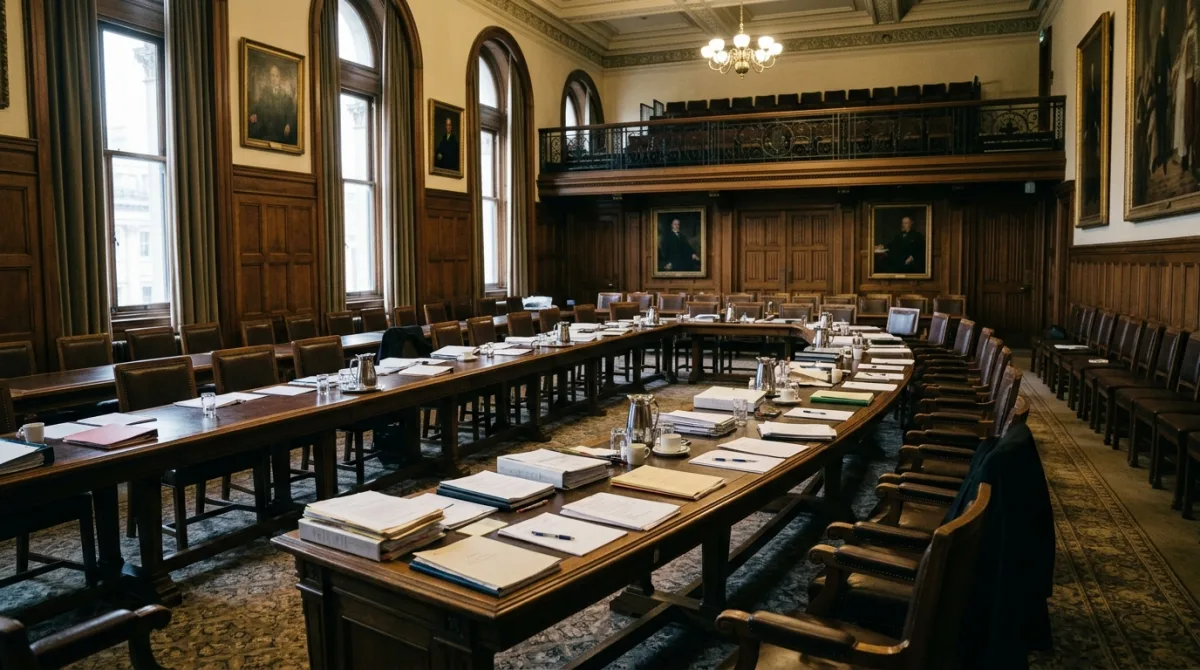
Legislative Body Amends Proposed Public Spending Bill
The legislative body has approved significant amendments to the proposed public spending bill, re-prioritising governmental expenditures for the upcoming fiscal cycle following extensive debate and cross-party negotiations. These changes represent a substantial re-evaluation of the initial budgetary proposals put forward by the executive, particularly affecting allocations for public services and national infrastructure projects.
The revised bill now includes notable shifts in funding, redirecting resources towards specific sectors identified as critical during parliamentary scrutiny. This marks a departure from earlier drafts, reflecting a complex interplay of political pressures and evolving economic assessments.
Path to Revision
The journey of the public spending bill began with its initial presentation by the executive at the start of the current legislative session, outlining broad fiscal priorities and departmental budgets. This preliminary draft immediately faced scrutiny from various parliamentary committees, which commenced detailed line-by-line examinations of proposed expenditures and revenue forecasts.
During the committee stage, numerous concerns were raised regarding the adequacy of funding for several key public services and the economic assumptions underpinning projected growth. Backbench Members of Parliament from the ruling coalition, alongside opposition parties, voiced strong objections to specific cuts and questioned the long-term sustainability of certain investment plans. Public consultations and submissions from advocacy groups further highlighted areas of potential underfunding or misallocation.
Intense negotiations ensued over several weeks, particularly between the Treasury and departmental ministers, and then across the political spectrum. These discussions focused on finding common ground for areas like social welfare provision and regional development. The amendments ultimately approved reflect a series of compromises forged under pressure to secure parliamentary majority support for the crucial financial legislation.
Factors Shaping the Outcome
The final shape of the amended public spending bill was determined by a confluence of political and economic considerations, revealing the practical constraints on government power.
- Coalition Stability: Maintaining the cohesion of the ruling coalition required concessions to junior partners, who secured increased funding for specific environmental programmes in exchange for supporting broader economic reforms.
- Fiscal Outlook: Updated economic forecasts, indicating a slower-than-anticipated growth rate and persistent inflationary pressures, necessitated a recalibration of planned capital expenditure to align with revised revenue projections.
- Public Advocacy: Sustained campaigns by various public sector unions and charity organisations successfully lobbied for the ring-fencing of certain social care budgets, preventing deeper cuts initially proposed for elderly support services.
- Regional Balance: Demands from MPs representing constituencies with significant infrastructure deficits led to a reallocation of funds, boosting transport links and digital connectivity projects in traditionally underserved areas at the expense of urban cultural initiatives.
These factors collectively influenced the shift from the executive's original proposal, demonstrating the dynamic nature of legislative power. The trade-offs involved illustrate the challenges of balancing competing demands within a finite national budget.
Impacted Groups
Public Services and Local Authorities
The amended bill significantly alters the financial landscape for public services, with a reported increase in funding for primary healthcare provisions, projected to support the hiring of several thousand additional staff over the next two years. Conversely, planned capital expenditure for new educational facilities has been scaled back across a substantial number of local authorities, potentially delaying upgrades for hundreds of schools.
Local councils, which deliver a wide array of public services, face revised grant allocations. While some are set to receive targeted funding for social care initiatives, others will experience a reduction in general revenue support, requiring a re-evaluation of local service delivery models for millions of residents.
Infrastructure and Energy Sector
The legislation funnels a substantial share of new investment into national infrastructure, particularly for rail network modernisation and renewable energy projects. This is expected to create thousands of construction and technical jobs over the next five years, primarily benefiting large engineering firms and specialist contractors.
However, funding for certain road maintenance programmes has seen a slight decrease from original proposals. This shift may impact smaller, regional contracting companies that rely on consistent local government contracts for roadworks, potentially affecting their operations over the immediate fiscal year.
Households and Welfare Recipients
Changes to the welfare system within the amended bill include a moderate uplift in certain universal credit elements, designed to provide additional support for hundreds of thousands of low-income households for the upcoming twelve-month period. Eligibility criteria for specific housing benefits have also been adjusted, potentially affecting a significant proportion of renters.
While the overall intent is to provide targeted relief, some financial analysts project that the combined effect of these adjustments, alongside other fiscal measures, may result in a net change in disposable income for various household types, with particular impacts on those reliant on multiple forms of state support.
The Case Against the Amendments
While the amendments to the spending bill have secured parliamentary approval, a strong case has been made by various economic commentators and opposition figures that the changes do not fundamentally address the nation's fiscal challenges. Critics argue that the revisions represent a series of short-term political fixes rather than a coherent long-term economic strategy.
Critics argue that the amendments fail to tackle the underlying structural deficits in public finances, merely shifting the burden onto different sectors and postponing necessary reforms.
This perspective suggests that the reallocations primarily serve to appease specific parliamentary factions and interest groups, rather than making difficult but necessary decisions about national spending priorities. Concerns have been raised that reducing capital expenditure in some areas to boost others could lead to inefficiencies and missed opportunities for future growth. Furthermore, some analysts contend that the revised economic forecasts, while acknowledged, have not been fully integrated into a truly resilient spending plan.
Uncertainties Ahead
Impact of Implementation
Despite the bill's passage, significant uncertainties remain regarding the practical implementation of the revised spending plans and their ultimate effectiveness. The ability of government departments and local authorities to efficiently absorb and deploy the altered funding streams, particularly where projects have been accelerated or scaled back, is yet to be fully tested.
Questions persist about the administrative capacity to manage the significant shifts in capital allocation, especially concerning the availability of skilled labour and materials for large-scale infrastructure projects. Furthermore, the true impact of the welfare adjustments on household finances will depend on broader economic conditions, including the trajectory of inflation and employment rates over the coming months, which could either amplify or diminish the intended benefits.
What Happens Next
Following parliamentary approval, the amended public spending bill will now proceed for Royal Assent, a procedural step that formally enacts it into law. Government departments will then commence the process of updating their detailed spending plans and issuing guidance to relevant public bodies and contractors, outlining the specifics of the new budgetary allocations.
The initial observable signals of these changes will likely emerge in the coming weeks and months. This includes revised departmental procurement notices, changes in recruitment patterns within specific public service sectors, and announcements regarding the commencement or alteration of key infrastructure projects. Further scrutiny of the bill's effects is expected during subsequent parliamentary reporting cycles, as departments begin to publish their actual expenditures against the new targets.
Reader responses
Responses are read by the desk before they appear. A factual correction reaches us fastest here, and is made on the article itself with a dated note.
No responses on this report yet.