Legislative bloc revises demands for budget bill support
A legislative bloc has revised its demands for supporting the upcoming budget bill, indicating ongoing negotiations and potential shifts in the legislative process.
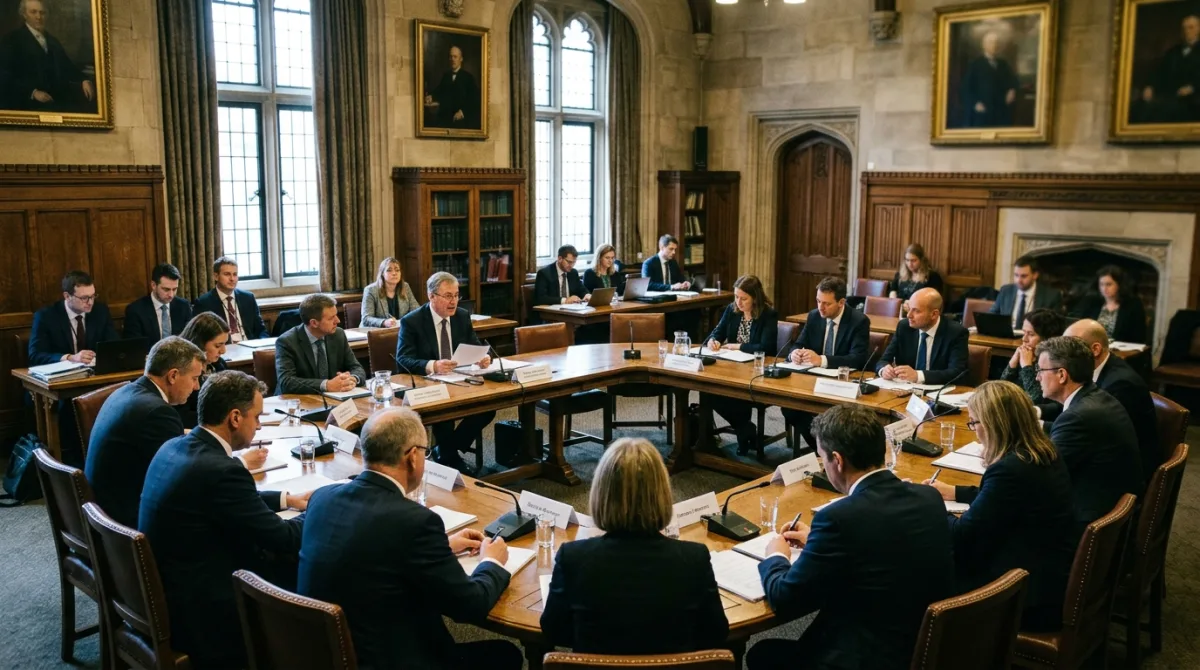
Legislative Bloc Shifts Stance on Budget Support
A influential legislative bloc, whose support is necessary for the passage of the government's contentious budget bill, has formally presented a revised set of demands, marking a significant recalibration from its initial uncompromising position. This recalculation follows weeks of intense, often fraught, negotiation and signals a potential, albeit narrow, path towards consensus on the critical spending plan. The updated proposals address several core areas previously deemed non-negotiable by the bloc, indicating a pragmatic move to secure necessary government concessions while retaining some key policy wins.
The development offers a glimmer of hope for the government, which faces increasing pressure to secure a parliamentary majority for its fiscal agenda before a looming procedural deadline. Analysts suggest the revised demands represent an attempt by the bloc to balance its policy objectives with the political imperative of avoiding a prolonged legislative stalemate. This shift now places the onus back on the government to find common ground, potentially requiring further adjustments to its own spending priorities.
Path to Revised Demands
The current situation emerged from an initial budget bill proposed by the government several weeks ago, which outlined significant spending cuts and reallocations across various departments. Immediately following its introduction, the legislative bloc declared that it would not support the bill in its original form, citing profound concerns over its impact on regional development and social welfare programmes. This firm stance created an immediate parliamentary deadlock, as the government lacked a clear majority without the bloc's votes.
Weeks of private negotiations and public statements ensued, revealing a wide gap between the government's overarching fiscal consolidation priorities and the bloc's specific policy objectives. Media reports indicated growing frustration within government circles over the bloc's perceived intransigence, while the bloc maintained that its demands were fundamental to its electoral mandate. The government faced increasing pressure from both internal party factions and external economic bodies to secure a budget agreement swiftly, leading to a renewed willingness to consider more substantial adjustments than initially planned.
Concurrently, internal discussions within the legislative bloc, reportedly contentious and prolonged, ultimately led to a consensus on a refined set of conditions for their support. These discussions involved weighing the political risks of a budget collapse against the potential gains of continued negotiation. This internal alignment, achieved after significant deliberation among the bloc's leadership, enabled them to present a unified, albeit altered, front to the negotiating table, signaling a strategic pivot designed to break the impasse.
Driving Forces Behind the Outcome
Several concrete factors are now poised to determine whether the revised demands ultimately lead to a successful budget agreement, each involving complex trade-offs for both the government and the legislative bloc.
- Government's Fiscal Leeway: The extent to which key ministries can reallocate existing funds or identify new, unbudgeted revenue streams without fundamentally altering the overall deficit target is paramount. This involves a delicate balance between meeting the bloc's specific spending demands and maintaining the government's broader fiscal credibility in the eyes of financial markets and international institutions.
- Public Opinion Pressure: The perceived political cost of either capitulating too much to the legislative bloc or, conversely, failing to pass a budget at all, plays a significant role. Recent shifts in public polling data regarding economic stability and the provision of essential public services could strengthen either side's hand, prompting a more conciliatory or more entrenched position depending on the perceived mandate.
- Internal Bloc Cohesion: The ability of the legislative bloc to maintain unity among its diverse factions as negotiations intensify is a critical consideration, particularly if the government offers concessions that satisfy some but not all members. Any significant dissent or splintering within the bloc could weaken its collective bargaining position and complicate the final agreement.
- Opposition's Strategic Posture: The degree to which opposition parties might exploit a protracted budget impasse, either by offering their own alternative proposals or by simply standing aside to highlight government disunity, directly influences the dynamic. Their actions could subtly influence the government's willingness to compromise with the bloc, potentially pushing for a swifter resolution to avoid giving the opposition undue political leverage.
A key trade-off for the government could involve increased spending in one area, such as regional infrastructure development, which might necessitate corresponding cuts or deferrals in another, such as national defence projects or long-term research initiatives. This creates internal tensions within the government's own ranks, as various departments and their respective ministers vie for limited resources under the revised budgetary framework, adding another layer of complexity to the ongoing discussions.
Affected Groups and Implications
Citizens reliant on public services
The ongoing budget negotiations, and specifically the outcome of the revised demands, will directly affect a substantial share of citizens reliant on core public services. For instance, the bloc's demands regarding healthcare funding could mean the difference between maintaining or reducing current levels of service for a significant number of patients, particularly those on waiting lists for elective surgeries or requiring access to specialised mental health support. Any changes to social welfare programmes, a key area of contention, would directly impact households receiving various forms of state assistance, potentially altering their disposable income over the next fiscal year.
Furthermore, the focus of some of the bloc's revised demands on regional infrastructure projects has specific implications for communities outside the major metropolitan areas. If these demands are met, it could lead to the creation of a notable number of jobs in construction and related industries over a multi-year period, alongside improvements in local transport links and digital connectivity. Conversely, if these projects are scaled back or deferred, these regions could experience continued economic stagnation and reduced access to modern amenities, affecting local businesses and employment prospects for a substantial portion of the working-age population.
Beyond direct service provision, the budget's final form will influence broader economic stability and investment confidence. Businesses, both large and small, are closely observing the process, as clarity on government spending and fiscal policy affects their long-term planning and investment decisions. A stable and predictable budget outcome is often seen as a prerequisite for sustained economic growth, impacting general employment trends and overall consumer confidence across the nation.
The Case Against Concessions
A significant body of opinion, particularly from within the government's own fiscal conservative wing and some economic commentators, strongly objects to the very principle of making substantial concessions to the legislative bloc. This perspective argues that yielding to revised demands, even if pragmatic in the short term, sets a dangerous precedent for future budget cycles. It is contended that such moves erode the government's fiscal discipline and its ability to implement its announced economic strategy without undue interference.
Granting these revised demands will undermine the government's long-term fiscal strategy and encourage future legislative blocs to make equally unsustainable requests, leading to chronic budgetary instability.
Proponents of this objection suggest that bowing to these pressures could lead to an increase in the national debt over time, or force cuts in other, less visible but equally vital, areas of public expenditure to compensate for the additional spending. They argue that maintaining a firm stance on core budgetary principles, even at the risk of a temporary legislative impasse, is ultimately more responsible for the nation's financial health. This viewpoint emphasises that the integrity of the budget process should not be compromised by political expediency.
Uncertainties Surrounding the Final Package
The final composition of the budget package
While the legislative bloc's revised demands are now public knowledge, the specific government counter-offers and the precise language of any amended clauses within the budget bill remain under intensive negotiation. It is currently unclear which of the bloc's new conditions will be fully accepted, partially met, or rejected outright by the government, and how these potential changes might cascade through other departmental allocations. The detailed financial implications of the final compromise, including any necessary reallocations of existing funds or the identification of new revenue measures to cover additional costs, are also yet to be disclosed in full. Furthermore, the extent to which other minor parties or independent legislators might be brought into the fold to solidify support remains an open question, adding another layer of complexity to the eventual parliamentary vote.
Next Steps in the Budget Process
In the coming days, observers will be closely watching for several observable signals indicating progress, or lack thereof, in the budget negotiations. Further rounds of negotiation between senior government ministers and the legislative bloc's leadership are anticipated, likely taking place behind closed doors. Public statements from key figures on both sides will be scrutinised for any indication of softening or hardening positions, or for hints of a breakthrough on specific contentious issues. Any announcement of a preliminary agreement on particular sections of the budget could signify a significant move towards resolution.
Should a comprehensive agreement be reached, the amended budget bill would then proceed through the remaining parliamentary stages, including potential committee reviews and further opportunities for amendments before a final vote. The political ramifications extend beyond the immediate budget, as the outcome could influence future legislative alliances, the government's broader legislative agenda, and potentially even the stability of the current administration. The degree of compromise reached will undoubtedly shape the political landscape over the next legislative period.
Reader responses
Responses are read by the desk before they appear. A factual correction reaches us fastest here, and is made on the article itself with a dated note.
No responses on this report yet.