Legislative bloc revises demands for budget bill support
A legislative bloc has revised its demands concerning the budget bill, indicating a potential shift in negotiations for its support. This development could influence the final shape of the proposed legislation.
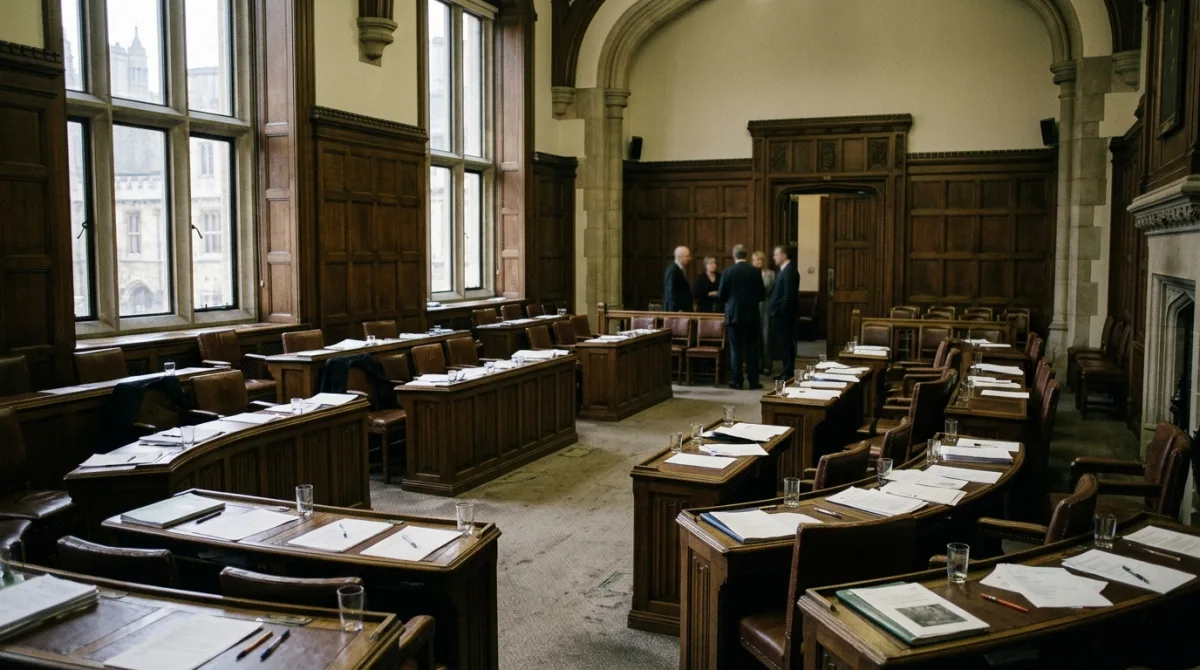
Legislative Bloc Shifts Position on Key Budget Demands
A significant legislative bloc has formally revised its key demands for supporting the government's crucial annual budget bill, signaling a potential shift in the prolonged negotiations that have stalled the legislative process for weeks. The updated position, communicated to government whips earlier this week, indicates a softening on some previously entrenched fiscal conditions while introducing new, albeit less financially onerous, policy stipulations.
This development comes as the deadline for the budget's passage looms, with the government's ability to implement its spending plans for the coming fiscal year directly dependent on securing sufficient cross-bench support. The revised stance could either pave the way for a quicker resolution or introduce new complexities as the government assesses the feasibility and political cost of these altered requirements.
Negotiation's Winding Path to Revision
The journey to this revised position began with the initial budget proposal, which faced immediate and strong opposition from the bloc over its proposed cuts to certain social programmes and its approach to regional development funding. The bloc's original demands, presented weeks ago, included specific reversals of proposed spending reductions and the allocation of a substantial new fund for infrastructure projects in their constituent regions, creating a significant fiscal gap in the government's plan.
Following weeks of intense, often fraught, back-channel discussions and limited public engagement, the government made a series of minor concessions that were deemed insufficient by the bloc. Internal deliberations within the legislative group, reportedly marked by animated debate between factions prioritising fiscal prudence versus those advocating for more robust social spending, appear to have led to a re-evaluation of their strategic leverage. External pressures, including a perceived dip in public support for prolonged political deadlock and increasing calls from business leaders for certainty, also played a role in prompting the bloc to reconsider its tactics and refine its negotiating position.
This iterative process of proposal and counter-proposal, combined with internal political calculations regarding the perceived 'win' necessary to satisfy their own constituents, ultimately culminated in the current, refined set of conditions. The shift demonstrates the dynamic nature of coalition building and legislative power, where initial maximalist positions are frequently tempered by the realities of garnering sufficient votes.
Determining Factors for the Budget's Fate
The ultimate passage of the budget bill, and the precise form it takes, will be decided by a delicate interplay of several concrete factors, each requiring careful navigation by both the government and the legislative bloc.
- Governmental Majority Strength: The current administration operates with a parliamentary majority that, while present, is not substantial enough to pass contentious legislation without the support of at least some cross-bench members. This narrow margin means the votes of this particular legislative bloc, representing a swing of several seats, are critical to avoiding a defeat on a supply bill, a scenario that typically carries significant political repercussions.
- Bloc Cohesion and Internal Unity: The legislative bloc itself is not entirely monolithic; it comprises members with varying regional interests and ideological leanings, ranging from those focused on agricultural subsidies to others prioritising urban regeneration. The ability of the bloc's leadership to maintain a unified front behind the revised demands, balancing the specific needs of its diverse membership against the common goal of influencing the budget, will be crucial.
- Public Opinion and External Pressure: Public sentiment regarding the budget's impact on everyday life, particularly concerning cost-of-living issues and the provision of essential public services, exerts considerable pressure on both sides. Opinion polls and media commentary reflecting voter fatigue with political wrangling, or strong support for specific spending areas, can influence the willingness of either party to compromise or stand firm on their positions.
- Economic Projections and Fiscal Realities: The prevailing economic outlook, including inflation forecasts, projected growth rates, and the national debt position, constrains the government's capacity for concessions and shapes the public perception of any spending increases. The trade-off between addressing immediate social needs through increased expenditure and maintaining long-term fiscal discipline is a constant undercurrent in these negotiations, influencing the perceived reasonableness of any demand.
Each of these elements introduces a layer of complexity, forcing the government to weigh the political cost of rejecting demands against the fiscal implications of accepting them, while the bloc must consider the efficacy of its leverage against the risk of being seen as obstructionist.
Impact on Key Demographics
Households Facing Cost-of-Living Pressures
Millions of households across the country, particularly those with lower and middle incomes, stand to be directly affected by the revised budget demands. The bloc’s new proposals include targeted amendments to energy support schemes, seeking to extend relief for an additional period beyond the government's original projection, potentially impacting an estimated substantial share of all households. This could translate into a slight reduction in average monthly utility bills for eligible families during the coming winter months, offering a temporary reprieve from escalating costs.
Furthermore, the revised demands also touch upon the indexation of certain welfare benefits, proposing an adjustment mechanism that ties increases more closely to current inflation rates rather than previous periods. If adopted, this could mean a marginal but material increase in disposable income for a significant portion of benefit recipients, potentially benefitting several million individuals over the next two fiscal years by maintaining the real value of their support payments.
The Case Against the Revision's Efficacy
While the revised demands are presented as a pragmatic step towards resolving the budget impasse, a strong argument can be made that they ultimately represent a missed opportunity for more fundamental reform or that they merely delay inevitable fiscal reckonings. Critics suggest that the concessions sought by the bloc are too narrowly focused on short-term relief, failing to address the underlying structural issues within the economy or public services that necessitate such annual budget battles.
The updated demands offer only superficial adjustments to the budget, rather than compelling the necessary long-term strategic investments or genuine fiscal rebalancing that the nation requires.
This perspective posits that by softening some of its more ambitious initial demands, the bloc has potentially traded off a chance for significant, lasting policy change for a more politically palatable, but ultimately less impactful, immediate gain. It is contended that such an approach perpetuates a cycle of reactive budgeting rather than fostering proactive governance, and that the financial implications of the revised demands, while less onerous than the original, still add to the national expenditure without tackling core challenges.
The Extent of Government Concessions
What Specifics Remain Undisclosed?
One of the most significant unknowns surrounding the revised demands is the precise extent to which the government is prepared to concede on the new stipulations, and how these potential concessions will be framed within the final budget text. While the broad strokes of the bloc's updated position are known, the specific legislative language for any amendments, particularly regarding the proposed changes to energy support and benefit indexation, has not yet been made public. It remains unclear whether the government will fully adopt the bloc's suggested mechanisms, or if it will seek to implement its own, potentially diluted, versions that partially address the demands while minimising their financial impact or political implications. The negotiations are likely to delve into the minutiae of implementation, which could significantly alter the real-world effect of the revisions.
Next Steps in the Legislative Process
With the revised demands now formally submitted, attention shifts immediately to the next phase of negotiations, expected to involve direct talks between senior government ministers and the bloc's leadership. These discussions will centre on translating the revised demands into concrete legislative amendments that can be incorporated into the budget bill. Observers anticipate a series of intensive, closed-door meetings over the coming days, aimed at finding common ground and drafting mutually acceptable language.
Should an agreement be reached, the budget bill, with any agreed-upon amendments, will then proceed to further parliamentary stages, including committee review and potentially additional debates on the floor of the legislature. Public statements from key figures on both sides will be closely watched for signals of progress or continued sticking points, as the legislative clock continues to tick towards the final vote.
Reader responses
Responses are read by the desk before they appear. A factual correction reaches us fastest here, and is made on the article itself with a dated note.
No responses on this report yet.