Preliminary lab findings suggest cellular repair pathway
Early laboratory research indicates a novel cellular repair pathway, potentially shedding light on mechanisms for maintaining cell integrity and function. Further study is anticipated.
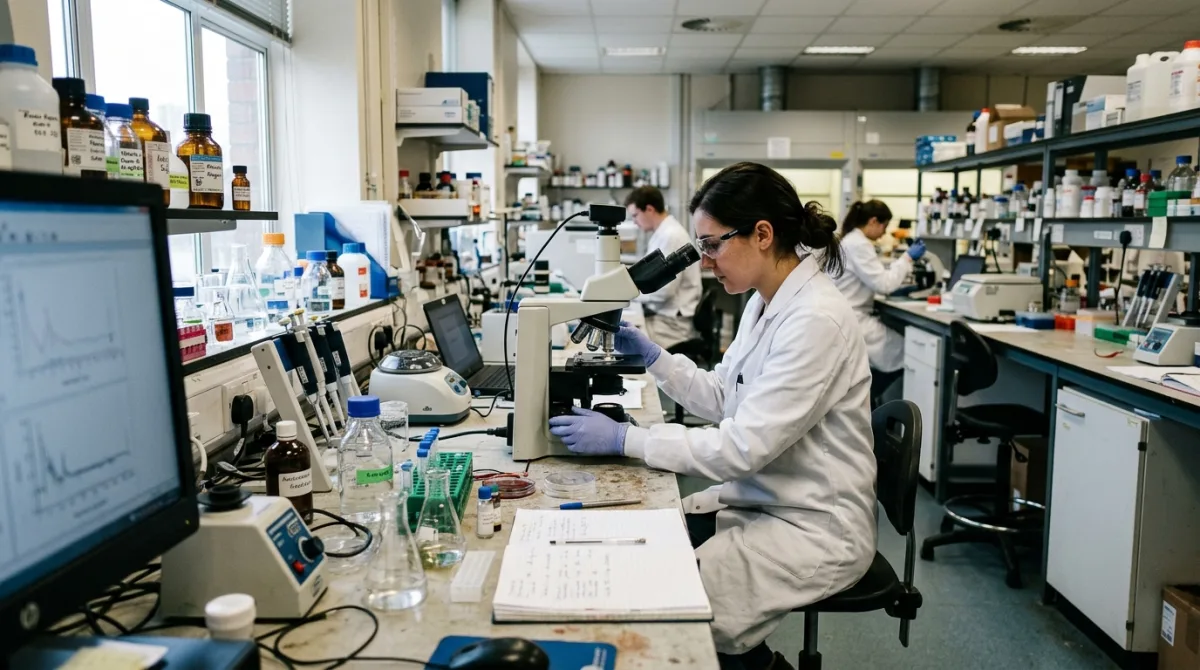
Preliminary Lab Findings Point to Novel Cellular Repair Mechanism
A team of researchers has recently reported preliminary laboratory findings suggesting the existence of a previously uncharacterised cellular repair pathway. This observation, made in controlled cell culture environments, points towards a novel biological mechanism by which damaged cells might actively restore their integrity and function. The discovery offers a conceptual framework for understanding how cells respond to various forms of internal stress, potentially opening new avenues for future investigation into cellular resilience. These initial observations are considered foundational, marking an early stage in scientific discovery.
The suggested pathway could represent a fundamental biological process that cells employ to maintain health and recover from various forms of insult. While still in its nascent stages, this research contributes to the broader understanding of cellular homeostasis and the intricate mechanisms that govern cell survival and adaptation. Further investigation will be necessary to fully comprehend its implications and potential broader significance within complex biological systems.
Tracing the Discovery of a Novel Pathway
The investigation originated from a series of meticulous observations of human fibroblast cell lines subjected to carefully modulated stressors, such as oxidative damage and nutrient deprivation. Scientists initially noted a consistent and reproducible pattern of specific gene activation and protein synthesis occurring shortly after cellular insult, which deviated from known stress responses. This led them to hypothesise an organised, coordinated biological mechanism responsible for mitigating the induced damage, rather than merely a general survival response.
To test this theory, the research team systematically employed advanced genetic perturbation techniques, including targeted gene silencing and deletion using CRISPR-Cas9 technology, to disrupt candidate genes identified from their initial expression profiling. Further experiments involved tracking the cellular fate of these manipulated cells under stress. They found that disruption of a particular set of genes severely impaired the cells' ability to recover and maintain viability, suggesting their collective role in a critical repair process.
Advanced imaging techniques, such as live-cell microscopy and super-resolution microscopy, were then utilised to visualise the spatial organisation and temporal dynamics of the identified proteins within the cell. These visualisations revealed a sequential assembly and disassembly of protein complexes at sites of cellular stress, providing strong visual evidence for a coordinated pathway rather than isolated molecular events. Biochemical assays, including protein-protein interaction studies and enzyme activity measurements, further elucidated the proposed functional roles of these components, detailing how they might interact to achieve repair.
Critical Factors for Future Validation
Progress from these preliminary findings to any meaningful application will hinge on several critical factors and their associated trade-offs. Each stage of validation introduces new complexities and requires careful consideration of the research approach.
- Mechanism specificity: The precise biochemical and molecular steps that govern the initiation, execution, and termination of this repair pathway require exhaustive mapping to understand its vulnerabilities and control points.
- Physiological relevance: Demonstrating that this pathway operates and holds significance in diverse human cell types and tissues, beyond the initial fibroblast models, is paramount.
- In vivo validation: Moving beyond cell cultures, the pathway's function must be robustly confirmed in living organisms, typically starting with relevant animal models that mimic human disease conditions.
- Therapeutic manipulability: Identifying specific, non-toxic molecules or genetic approaches that can reliably modulate the pathway's activity – either enhancing or inhibiting it – will be a significant determinant of its therapeutic potential.
The trade-offs inherent in these factors include balancing the depth of mechanistic understanding against the breadth of its applicability, and the specificity of an intervention against the complexity of the biological system it aims to influence. Each step requires substantial investment and presents unique scientific challenges.
Potential Impact on Future Research
Future Chronic Disease Research
Should these preliminary laboratory findings eventually be substantiated through extensive further research, they could profoundly influence the conceptualisation and treatment strategies for a range of conditions marked by chronic cellular damage and dysfunction. This includes, but is not limited to, neurodegenerative disorders such as Alzheimer's and Parkinson's diseases, where neuronal repair mechanisms often fail, and various age-related pathologies where cellular senescence and accumulated damage contribute to organ decline. Similarly, conditions involving chronic inflammation and tissue remodelling, such as certain fibrotic diseases, might benefit from deeper insights into intrinsic cellular repair.
It is crucial to underscore that these findings do not, at this juncture, offer any immediate therapeutic solutions or direct benefits to existing patient populations. The suggested pathway remains a laboratory observation, far removed from clinical application. Instead, its significance lies in potentially providing a new target for drug discovery and a deeper understanding of fundamental biological processes that, over a protracted period of focused research, could lead to novel intervention strategies. The long-term impact could be substantial, affecting millions globally living with conditions where cellular integrity is compromised, but this remains a distant prospect contingent on many successful research stages.
The Gap Between Lab and Living Systems
The most substantial objection to the immediate interpretation of these findings lies in the considerable chasm between observations made in highly controlled laboratory cell cultures and the immensely complex, dynamic environment of a living human body. Cellular behaviour in isolation can differ dramatically from its behaviour within tissues, organs, and systems, where it interacts with countless other cells, extracellular matrix components, and systemic signals.
The observed cellular repair pathway may represent an artificial response specific to laboratory conditions, with limited or no functional relevance in a living organism.
Furthermore, even if a similar pathway operates within a living system, its quantitative contribution to overall cellular health and disease progression might be minor compared to existing, well-characterised repair mechanisms. There is a possibility that this pathway is only activated under very specific, perhaps rare, types of cellular stress that are not commonly encountered in physiological or pathological contexts. The absence of a systemic immune response, hormonal regulation, and metabolic feedback loops in cell culture models means that any observed repair mechanism might be significantly altered or even overridden by these factors in vivo. Therefore, extrapolating directly from these preliminary findings to human health outcomes carries considerable scientific risk and necessitates extreme caution.
Unanswered Questions in Cellular Integration
How does the pathway integrate with wider cellular networks?
A significant area of ongoing uncertainty concerns the precise integration of this newly suggested repair pathway within the broader tapestry of a cell's existing regulatory and metabolic networks. It remains unclear how its activation is precisely coordinated with other established stress responses, such as apoptosis or autophagy, or how it might influence fundamental processes like cell growth and division. The detailed molecular mechanisms governing its activation thresholds, its feedback loops, and how its activity is ultimately terminated to prevent over-repair or inappropriate cellular changes are also largely unknown. Furthermore, the full complement of proteins and non-coding RNAs that might regulate or participate in this pathway, beyond the initial set identified, requires comprehensive elucidation. Until these intricate systemic interactions are thoroughly mapped, the exact physiological role of the pathway and its potential for safe and effective therapeutic modulation will remain speculative.
Observing the Next Research Steps
The immediate future for this research will involve a rigorous programme of validation and detailed mechanistic characterisation, moving beyond the initial cell culture observations. Scientists will now focus on replicating these findings in a wider array of human cell types and, critically, in more complex biological models such as three-dimensional organoids and various in vivo animal models relevant to conditions of cellular damage. These studies aim to confirm the pathway's existence and function within a multicellular, systemic context, providing a more robust understanding of its physiological significance.
Concurrently, efforts will be directed towards fully mapping the molecular architecture of the pathway, identifying all participating proteins, enzymes, and regulatory molecules. This will involve advanced techniques like quantitative proteomics and single-cell transcriptomics to build a comprehensive picture of its components and their interactions. Should these subsequent stages yield positive results, the research could then progress towards screening for specific chemical compounds or genetic interventions capable of modulating the pathway's activity. Any such modulators would then themselves require extensive pre-clinical testing for efficacy and safety, representing a substantial and prolonged research endeavour, ultimately aiming to assess if the pathway offers a viable target for future therapeutic development.
Reader responses
Responses are read by the desk before they appear. A factual correction reaches us fastest here, and is made on the article itself with a dated note.
No responses on this report yet.