Lab study identifies potential mechanism for cellular aging
A recent lab study sheds light on a potential mechanism driving cellular aging, identifying how the accumulation of certain protein aggregates may disrupt essential cellular functions over time.
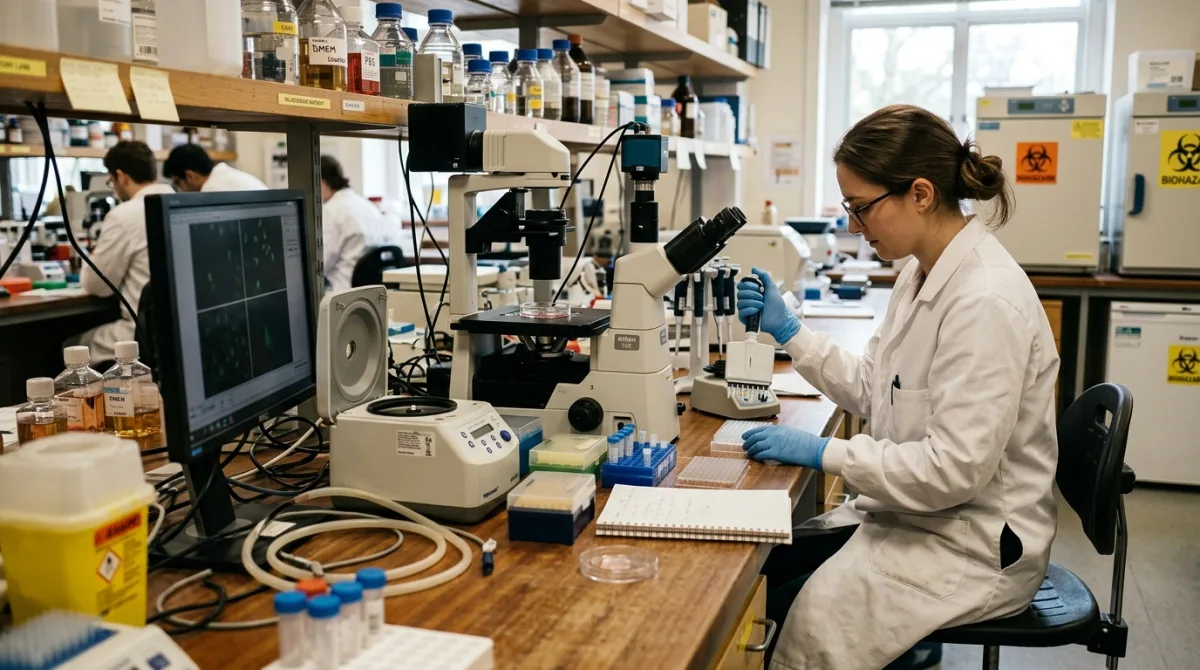
Lab study identifies potential mechanism for cellular aging
A recent laboratory study has identified a novel molecular pathway potentially contributing to cellular aging, offering new insights into the fundamental processes of biological senescence. Researchers have reported findings suggesting how specific cellular metabolic byproducts might lead to the accumulation of age-related damage within cells.
This discovery opens a new avenue for understanding the intricate mechanisms underlying why cells lose function over time. The research was conducted under highly controlled conditions, focusing on specific cell lines and their responses to molecular interventions, rather than in a living organism.
Tracing the metabolic pathway to senescence
The investigation began by addressing the long-standing scientific question of how cells accumulate damage over their lifespan, eventually leading to senescence. Prior research had extensively explored factors such as telomere shortening and mitochondrial dysfunction as key drivers of cellular aging, establishing a foundational understanding.
This new study differentiated itself by meticulously examining the generation and accumulation of specific metabolic byproducts within the cytoplasm of cultured cells. Researchers initially observed elevated levels of certain compounds in aged cell populations compared to younger ones, prompting a deeper inquiry into their origins.
The team then focused on the activity of a particular enzyme, tracking its functional changes under various experimental conditions designed to mimic cellular stress. Through a series of genetic manipulations and inhibitor applications, they were able to modulate the enzyme's activity and observe corresponding shifts in cellular health markers.
Their observations ultimately led them to hypothesise a direct and causal link between this enzyme-mediated metabolic pathway and the onset of cellular senescence. The sequence of events indicated that the overactivity of this pathway contributed to the cellular damage previously associated with aging.
Factors influencing the research outcomes
The reported findings are shaped by several critical factors inherent to the experimental design and the nature of laboratory research.
- Cell Model Specificity: The study relied on immortalised human cell lines and specific primary cell cultures, which provide a consistent and controllable environment for mechanistic investigation but might not fully replicate the complexity and heterogeneity of cells within a living organism.
- Controlled Environmental Stressors: The researchers introduced specific stressors or compounds at defined concentrations to induce and observe the aging mechanism, concentrations that may differ significantly from those naturally encountered within a physiological system.
- Genetic Background Homogeneity: The use of genetically uniform cell lines allowed for clear observation of cause-and-effect relationships for the identified mechanism, but this homogeneity might not reflect the diverse genetic variations present across human populations, which could influence individual responses to aging processes.
- Measurement Assay Limitations: The identification and quantification of cellular aging markers, such as specific protein aggregations or changes in gene expression, were achieved using established but discrete assays, each providing a snapshot rather than a comprehensive, dynamic view of the entire aging phenotype.
These elements collectively define the boundaries of what the study could establish with certainty, highlighting the trade-off between experimental precision and the broader applicability of the results to more complex biological systems.
Potential implications for researchers
Biomedical Researchers
The scientific community, particularly those engaged in gerontology, molecular biology, and age-related disease research, stands to be the primary group affected by these findings. This study introduces a novel conceptual framework for understanding cellular degradation, potentially influencing the research trajectories for a substantial share of scientists in these fields.
The identification of a new molecular pathway suggests fresh targets for investigation, which could lead to shifts in experimental designs and the allocation of research funding over the next several years. Researchers working on conditions such as neurodegenerative diseases, cardiovascular ailments, or metabolic disorders might find new avenues for exploring the underlying mechanisms of these complex conditions.
Understanding a distinct mechanism of cellular aging could inform the development of more refined in vitro and in vivo models for studying these diseases. This impact is primarily on the intellectual landscape and theoretical models within science, guiding future experimental inquiries rather than offering immediate clinical applications.
The challenge of physiological relevance
The primary challenge to these findings centres on the considerable leap required from observations within isolated cells in a laboratory setting to their direct relevance and impact within a whole living organism. While the study meticulously details a mechanism under controlled conditions, the intricate, multi-cellular environment of an animal or human body presents numerous interacting factors that could significantly mitigate, alter, or even negate the proposed pathway's effects.
The human body's sophisticated regulatory systems, the complex communication between different organs, and the tissue-specific responses to cellular processes are not fully replicated in a petri dish. Furthermore, the concentrations of compounds or the specific stressors applied in the laboratory may not accurately reflect the physiological conditions encountered naturally throughout a lifespan, raising questions about the pathway's actual contribution to human aging.
The identified cellular aging mechanism, while compelling in the laboratory, may not translate directly or significantly to the intricate biological processes of aging within a whole living organism.
Scepticism often arises from the historical record of promising in vitro discoveries that have not yielded therapeutic breakthroughs when tested in more complex biological systems. The scientific community generally maintains a cautious stance, recognising the inherent limitations of reductionist approaches to a systemic and multifaceted phenomenon like aging.
Efficacy in complex organisms remains unknown
Efficacy in Complex Organisms
The most significant unknown remains the extent to which this newly identified mechanism contributes to the broader process of aging in living organisms, particularly mammals. The reported study was confined to specific cell lines, meaning its direct impact on tissue function, organ health, and overall lifespan in a complex biological system is yet to be established.
Researchers have not yet determined if inhibiting or modulating this specific pathway in an animal model would demonstrably slow down or reverse age-related decline, nor have the full spectrum of potential off-target effects of such interventions been explored. The interplay of this mechanism with other known aging pathways also requires extensive investigation to understand its relative contribution to the overall aging phenotype.
Observable signals for future progress
The immediate next steps in the research trajectory will involve independent replication of these findings by other research groups, a standard and crucial practice in scientific validation. This process will typically entail applying the same experimental protocols to different cell lines or under slightly varied conditions to confirm the robustness and reproducibility of the observed mechanism.
Successful replication will significantly strengthen the evidence base for this particular pathway and establish it as a more widely accepted contributor to cellular aging. Further research will then likely pivot towards investigating this mechanism in more complex biological models, such as organoids or relevant animal models, over the coming years.
Scientists will monitor for measurable changes in lifespan, healthspan, or specific age-related biomarkers following interventions designed to modulate the newly identified pathway. The focus will be on observing whether manipulating this mechanism produces discernible physiological effects consistent with altered aging processes, moving beyond isolated cellular observations to systemic impacts.
Reader responses
Responses are read by the desk before they appear. A factual correction reaches us fastest here, and is made on the article itself with a dated note.
No responses on this report yet.