Initial lab study suggests potential pathway for nerve regeneration
A recent lab study indicates a potential pathway for nerve regeneration, identifying specific molecular mechanisms that could facilitate the repair of damaged nerves.
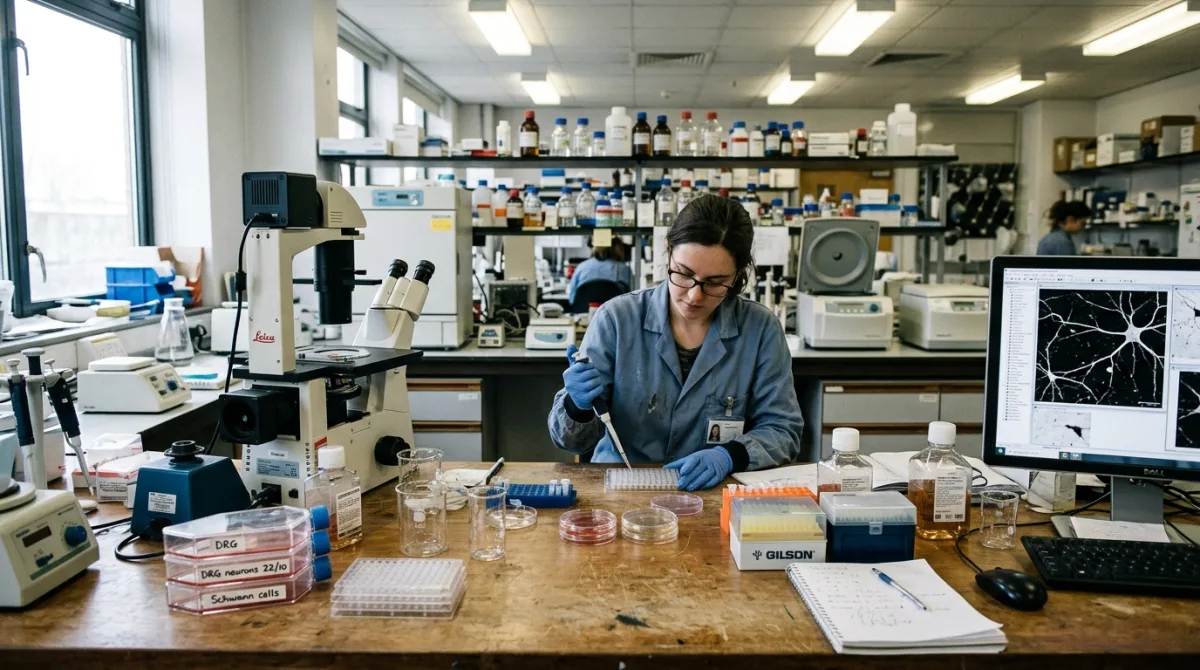
New Lab Discovery Hints at Nerve Repair Mechanism
A recent laboratory study has identified a specific molecular pathway that appears to facilitate the regrowth of nerve cells in controlled experimental conditions. This initial research offers a theoretical basis for exploring novel therapeutic approaches to neural damage, particularly within the central nervous system, where repair mechanisms are typically limited. The findings point towards a previously underappreciated endogenous factor capable of influencing axon regeneration in cultured neurons.
Published in a respected scientific journal, the study details how researchers manipulated a particular cellular signalling cascade to observe a measurable increase in axonal sprouting and elongation. This observation provides a crucial insight into the complex biological processes that govern nerve repair at a fundamental cellular level. The work represents a foundational step in understanding the inherent capacity of neurons to regenerate under specific stimuli.
Unravelling the Cellular Sequence for Regeneration
The journey to this discovery began with a long-standing challenge in neuroscience: understanding why nerves in the brain and spinal cord struggle to heal after injury, unlike those in the peripheral nervous system. For decades, much research focused on identifying and counteracting inhibitory molecules present in the central nervous system that actively prevent nerve regrowth following trauma. This established paradigm sought to remove barriers to regeneration.
The latest investigation, however, shifted its focus towards identifying factors that could actively promote regeneration, rather than solely blocking inhibitors. Researchers systematically screened various cellular pathways and protein interactions within isolated neuron cultures, seeking intrinsic mechanisms that might be leveraged. This meticulous process eventually pinpointed a specific signalling cascade and its associated proteins, which, when activated, demonstrated a significant capacity to encourage neurite outgrowth, suggesting a potential pro-regenerative pathway.
Translating Lab Findings: Key Determining Factors
The progression of this initial lab finding towards any practical application will hinge on several critical factors, each presenting distinct scientific and logistical challenges. Understanding these determinants is crucial for evaluating the long-term prospects of this research.
- Cell Type Specificity: The observed regeneration might prove specific to the particular type of neurons used in the study, potentially not translating effectively to all neural tissues or across various species.
- In Vitro vs. In Vivo: Results obtained in simplified petri dish experiments often differ substantially when tested within the complex physiological environment of a living organism, which includes numerous interacting variables.
- Molecular Complexity: Targeting a single molecular pathway, while promising in isolation, could prove insufficient for robust regeneration in the multi-factorial and often hostile environment of a real-world injury.
- Delivery Mechanism: Developing a safe and effective method to deliver any therapeutic compound or gene therapy that manipulates this pathway directly to damaged nerve tissue in the human body presents a substantial and intricate engineering challenge.
Each of these factors represents a significant hurdle, demanding extensive further research and careful scientific validation to overcome. The delicate balance of promoting nerve growth without inducing uncontrolled proliferation or other adverse effects remains a constant and paramount consideration throughout the entirety of this challenging research domain.
Potential Impact on Patient Groups
Individuals with Spinal Cord Injuries
Spinal cord injuries (SCIs) affect a substantial number of people globally each year, leading to devastating and often permanent neurological deficits. These injuries frequently result in paralysis, loss of sensation, and significant autonomic dysfunction below the injury site, profoundly impacting quality of life and requiring lifelong care. The current outlook for substantial functional recovery after severe spinal cord trauma remains severely limited, with existing treatments primarily focused on managing symptoms and preventing secondary damage rather than restoring lost nerve function.
This early-stage research, while far from clinical application, offers a glimmer of theoretical hope for future therapies that could potentially mitigate or reverse some of these devastating effects. Any successful translation of such a discovery into a treatment would represent a monumental shift in the management of SCIs, offering the prospect of improved motor function and sensory perception for affected individuals. However, the timeframe for any such development would be measured in decades, not years, given the complexity of the central nervous system.
Stroke Survivors
Stroke is a leading cause of long-term disability worldwide, with a significant proportion of survivors experiencing persistent neurological impairments such as motor weakness, speech difficulties, and cognitive deficits. While some natural recovery processes occur in the brain after a stroke, the extent is often insufficient for full functional restoration, leaving many individuals with chronic impairments that severely limit independence. Current rehabilitative efforts focus on maximising existing function and adapting to deficits.
New approaches to nerve regeneration, like the pathway suggested by this study, could theoretically enhance the brain's intrinsic ability to repair damage following an ischaemic event. By potentially promoting the regrowth or rewiring of neural connections, such therapies could lead to improved functional outcomes for a substantial number of individuals affected by stroke each year. The sheer volume of people impacted by stroke means even incremental improvements in recovery could have widespread societal benefits, though the journey from lab to clinic for this application would be exceptionally long and arduous.
Addressing the Preliminary Nature of the Findings
The enthusiasm surrounding such fundamental biological discoveries is invariably tempered by the sobering reality of drug development and clinical translation. A substantial proportion of promising laboratory findings, particularly in complex fields like neuroscience, ultimately fail to progress beyond early animal studies or even basic cell culture observations. The biological systems within a human body are orders of magnitude more intricate and tightly regulated than those of isolated cells in a controlled laboratory environment.
The findings are highly preliminary, confined to a controlled laboratory setting, and bear no immediate or direct relevance to human patients suffering from nerve damage.
This objection underscores the substantial chasm that exists between a cellular observation and a viable medical intervention. The precise conditions under which nerve regeneration was observed in this study are vastly different from the complex, often hostile environment of a traumatised spinal cord or a stroke-damaged brain. Factors such as inflammation, glial scar formation, and the sheer scale of tissue damage in vivo present formidable biological barriers that are simply not replicated in a petri dish experiment, highlighting the long road ahead for this research.
Unanswered Questions Regarding In Vivo Efficacy
Efficacy and Safety in Living Organisms
A critical and as yet unanswered question pertains to whether the identified molecular pathway can be effectively and safely manipulated to promote functional nerve regeneration within a living, complex organism. Researchers still need to determine if activating this pathway in vivo will lead to the desired anatomical and functional recovery without triggering unintended side effects, such as uncontrolled cell growth, aberrant neural circuit formation, or other systemic toxicities. The precise dosage, optimal timing, and appropriate duration of any potential intervention would also require extensive investigation through rigorous preclinical models before human trials could even be considered, representing a significant area of ongoing research.
The Path Forward for Nerve Regeneration Research
Following this initial laboratory finding, researchers will likely focus on replicating these observations in more complex in vitro models, potentially incorporating human-derived cell lines or organoids that better mimic the intricate neural architecture. These next steps aim to validate the robustness of the pathway and explore its potential interactions with other known regenerative or inhibitory factors. The scientific community will also engage in rigorous peer review and scrutiny of the initial published work, seeking to confirm the methodology and conclusions.
Should these initial validations prove successful, the subsequent phase would typically involve extensive studies in appropriate animal models of nerve injury, such as rodent models of spinal cord trauma or stroke. These in vivo experiments would be crucial for assessing the pathway's actual efficacy in promoting functional recovery, its safety profile, and the feasibility of targeted therapeutic delivery within a living system. Observable signals of progress in these stages would include further peer-reviewed publications detailing measurable functional improvements and a lack of adverse effects, paving the way for eventual discussions regarding potential therapeutic development.
Reader responses
Responses are read by the desk before they appear. A factual correction reaches us fastest here, and is made on the article itself with a dated note.
No responses on this report yet.