Lab data points to potential for new antibiotic class
New lab data suggests a promising pathway for developing a novel class of antibiotics, potentially offering new strategies against drug-resistant bacteria. Researchers identified compounds with potent antibacterial activity.
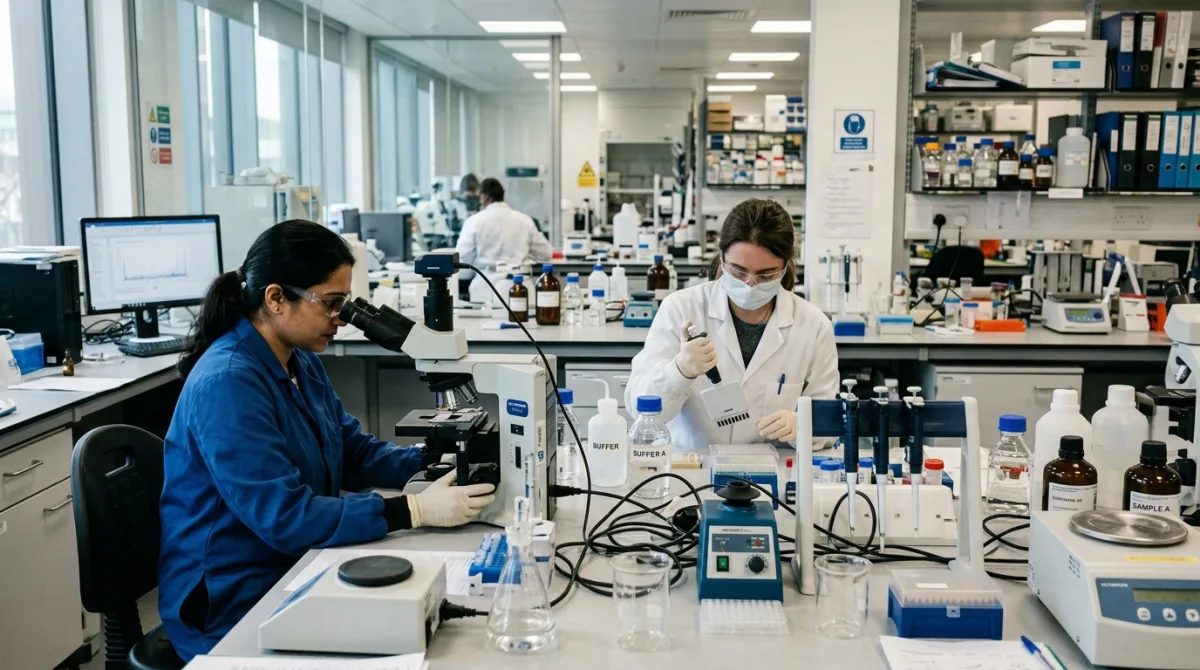
Novel Compound Shows Potent Action Against Resistant Bacteria
Laboratory data has revealed a distinct molecular structure exhibiting potent antimicrobial properties against a range of drug-resistant bacteria, suggesting the potential for a new class of antibiotics. This discovery represents a significant departure from existing antibiotic chemistries, offering a novel mechanism of action that could bypass many current bacterial resistance pathways. Researchers anticipate that this new structural class could offer a fresh approach in the ongoing battle against increasingly resilient pathogens, which continue to pose a substantial global health threat.
The findings, detailed in preliminary research, indicate that the compound targets a previously unexploited biological pathway within bacterial cells, differentiating it from established antibiotic categories like beta-lactams or fluoroquinolones. This distinction is critical in the context of rising antimicrobial resistance (AMR), where existing drugs are losing effectiveness at an accelerating pace. The early-stage results position the compound as a promising candidate for further development, though its journey to clinical application remains extensive.
From Computational Screening to *In Vitro* Inhibition
The investigation commenced with an extensive computational screening of several hundred thousand synthetic compounds, utilising advanced bioinformatics and machine learning to identify molecules with predicted unique interactions with bacterial cellular machinery. This initial phase systematically filtered out structures resembling known antibiotics, focusing instead on entirely novel chemical scaffolds that might circumvent existing resistance mechanisms. The process narrowed the field to a small number of candidates that showed theoretical promise in disrupting bacterial function without overtly affecting mammalian cells, based on *in silico* models.
Subsequent *in vitro* testing involved exposing these selected compounds to a diverse panel of bacterial strains, including those categorised as 'critical priority' by international health organisations due to their high resistance levels, such as methicillin-resistant *Staphylococcus aureus* (MRSA) and carbapenem-resistant *Enterobacteriaceae* (CRE). These experiments demonstrated a significant inhibitory effect on bacterial growth and viability at concentrations considered therapeutically relevant for potential drug development. Further detailed biochemical analyses were then conducted to elucidate the precise molecular target within the bacterial cell, confirming that the identified compound interferes with a pathway distinct from those targeted by current antibiotic treatments, such as cell wall synthesis or protein production.
Key Determinants for Advancement
The ultimate success of this potential new antibiotic class will hinge on several critical factors, each presenting distinct challenges and trade-offs that must be meticulously addressed throughout the development pipeline.
- Broad spectrum efficacy: The compound must demonstrate potent activity across a wide array of clinically significant bacterial pathogens, including gram-positive and gram-negative species, and those resistant to multiple existing treatments, without requiring concentrations that might lead to systemic toxicity in a host.
- Mammalian cell safety: Rigorous testing must establish a favourable therapeutic index, ensuring the compound selectively targets bacterial cells at effective doses while causing minimal or no damage to human cells and tissues, a common hurdle for many potent antimicrobial agents during preclinical development.
- Chemical synthesis scalability: The complexity and cost associated with manufacturing the compound on an industrial scale must be manageable, as overly intricate or expensive synthesis pathways could render the drug economically unviable for widespread production and distribution to meet global demand.
- Resistance barrier resilience: The unique mechanism of action should ideally present a high barrier to the development of bacterial resistance, meaning that bacteria would require multiple, complex genetic mutations to overcome its effects, thereby extending its useful clinical lifespan significantly compared to older antibiotics.
Each of these factors represents a significant hurdle, and trade-offs often exist, such as balancing a broader spectrum of activity with the potential for increased toxicity, or optimising for ease of synthesis at the expense of absolute potency or stability, requiring careful strategic decisions throughout the research and development phases.
Impact on Global Health and Research
Patients with Drug-Resistant Infections
The primary beneficiaries would be the millions of individuals globally who suffer from infections caused by antibiotic-resistant bacteria, for whom current treatment options are dwindling or non-existent. Such infections often lead to significantly prolonged hospital stays, increased medical costs, and substantially higher mortality rates, estimated to cause hundreds of thousands of deaths annually across the globe and projected to rise further without new treatments. A new antibiotic class could offer a vital lifeline, providing effective treatment options where none currently exist, potentially saving lives and improving outcomes for a substantial share of critically ill patients over the next several decades.
Beyond individual patients, healthcare systems worldwide stand to benefit immensely from a renewed arsenal against resistant pathogens. The economic burden of antimicrobial resistance (AMR) on health services is substantial, encompassing the costs of longer inpatient care, more expensive alternative drugs, and stringent infection control measures, collectively amounting to billions annually across developed nations. The introduction of an effective new class could significantly reduce these financial pressures, improve bed availability, and enhance overall public health security by mitigating the rapid spread of untreatable infections within hospital and community settings, thereby bolstering preparedness for future outbreaks.
The Long Road from Lab to Clinic
While the initial laboratory findings are encouraging, it is crucial to acknowledge the immense challenges inherent in translating preclinical success into a viable medical treatment. The drug discovery pipeline is notoriously inefficient, with only a small fraction of promising compounds ever progressing beyond early-stage development to reach patients, a reality often overlooked in initial reports.
The journey from a laboratory compound demonstrating antimicrobial activity to a clinically approved antibiotic for human use is exceptionally long, fraught with technical and financial hurdles, and historically culminates in failure for the vast majority of candidates due to unforeseen complexities in biological systems.
Numerous compounds that exhibit potent activity in petri dishes later prove ineffective or unacceptably toxic in complex living systems, such as *in vivo* animal models or human clinical trials, where metabolism and immune responses introduce new variables. Unforeseen metabolic pathways, off-target effects on human cells, or the rapid emergence of resistance *in vivo* frequently derail promising leads, underscoring the significant distance between initial lab data and practical application in medicine.
Unanswered Questions Remain
The Full Clinical Profile and Long-Term Viability
A comprehensive understanding of this potential new antibiotic's full clinical profile remains largely unknown, extending beyond simple efficacy against laboratory strains. Key open questions include its precise pharmacokinetics and pharmacodynamics within the human body—how it is absorbed, distributed to specific infection sites, metabolised by various organs, and excreted, and at what concentrations it achieves sustained therapeutic effect without accumulation. The potential for drug-drug interactions with other common medications, its long-term effects on the human microbiome, and any subtle, chronic toxicities that might only emerge after prolonged exposure or in specific patient populations, such as those with compromised liver or kidney function, are also currently undefined.
Furthermore, the rate and mechanisms by which bacteria might eventually develop resistance to this novel class in a real-world clinical setting are entirely speculative at this stage, despite its unique mode of action. While initial studies suggest a high barrier to resistance, the evolutionary adaptability of bacteria means that new resistance mechanisms often emerge over time once a drug is widely used, posing a continuing challenge for its sustained effectiveness and requiring ongoing surveillance and research into combination therapies.
Next Steps in Development
The immediate progression for this research will involve an intensified phase of preclinical development, focusing on comprehensive *in vivo* studies using a range of animal models of infection, such as those mimicking pneumonia or skin infections. These studies are designed to provide robust data on the compound's efficacy within a living organism, its safety profile across different dosages and durations of treatment, and its pharmacokinetic properties, including optimal dosing regimens and potential routes of administration, such as oral or intravenous delivery.
Should these extensive preclinical investigations yield consistently positive results regarding efficacy and safety in complex biological systems, particularly showing a wide therapeutic window, the next observable signal would be the submission of an Investigational New Drug (IND) application to regulatory bodies like the UK's Medicines and Healthcare products Regulatory Agency (MHRA) or the US Food and Drug Administration (FDA). This pivotal step would pave the way for human clinical trials, beginning with Phase I studies, which primarily assess the drug's safety and tolerability in healthy human volunteers, marking the critical transition from laboratory-based research to direct human evaluation in a controlled setting.
Reader responses
Responses are read by the desk before they appear. A factual correction reaches us fastest here, and is made on the article itself with a dated note.
No responses on this report yet.