Lab results illuminate potential new drug targets for aging
New lab results have identified specific molecular pathways that could be targeted to develop novel drugs for combating the effects of aging, offering a clearer path for therapeutic intervention.
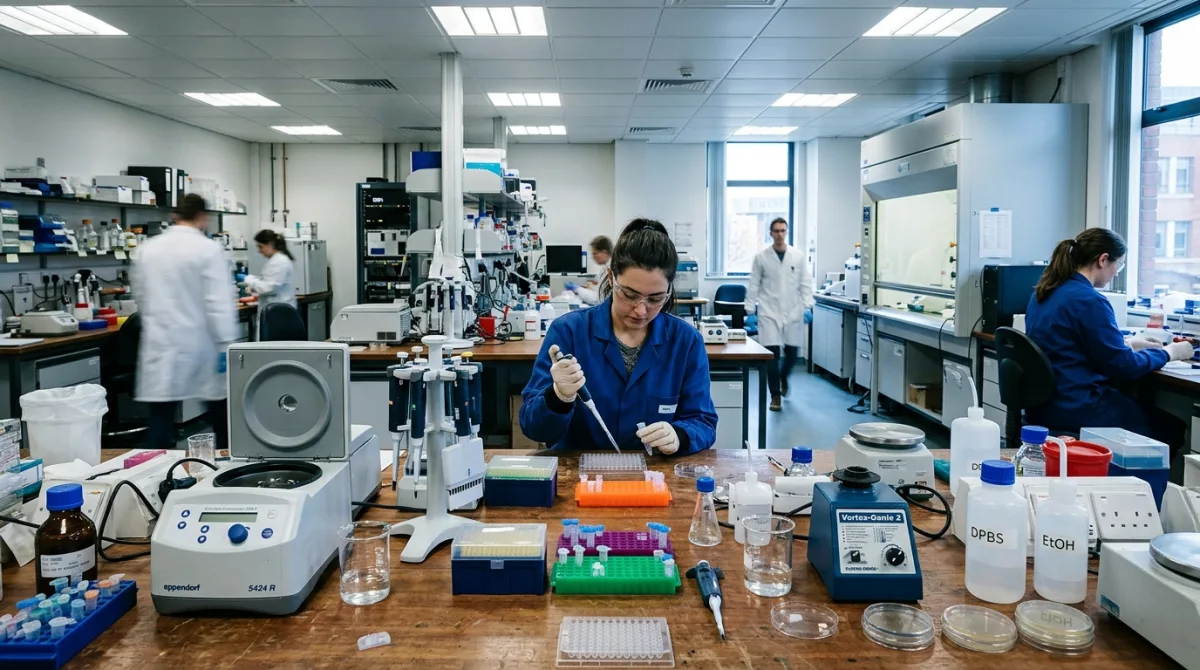
New research identifies cellular pathways linked to aging
A recent series of laboratory investigations has pinpointed several specific cellular pathways and molecular mechanisms that appear to play a critical role in the biological process of aging. These findings suggest new targets for the development of therapeutic compounds aimed at addressing age-related decline.
The studies, primarily conducted in controlled cellular environments and simple model organisms, have begun to map out the intricate biological changes that accumulate over time. This detailed understanding moves beyond broad theories of aging, offering concrete points of intervention at a molecular level.
Unravelling the mechanisms of cellular senescence
The research originated from a long-standing scientific challenge: understanding why cells lose function and accumulate damage as an organism ages. Initial observations focused on senescent cells – cells that stop dividing but remain metabolically active, secreting inflammatory molecules that can harm surrounding tissue.
Researchers employed high-throughput screening methods, analysing thousands of genetic and protein markers across different cell types and ages. This involved sophisticated bioinformatics tools to identify patterns and correlations between specific gene expressions, protein modifications, and the onset of senescent characteristics. Genetic manipulation techniques in organisms like yeast and nematodes allowed for the systematic inactivation or overexpression of genes to observe their direct impact on lifespan and cellular health markers, establishing causal links rather than mere associations.
Further investigation in mammalian cell cultures then focused on validating these initial findings, observing how specific interventions could modulate the identified pathways. This sequential approach, moving from broad genetic screens to targeted cellular experiments, systematically narrowed down the candidate mechanisms that appear to govern cellular aging processes.
Translating lab findings into human therapies
The journey from these initial lab results to effective human therapies is complex, with several critical factors determining success.
- Target specificity: The potential drug must precisely engage the intended molecular target without broadly affecting other vital cellular functions. Achieving this specificity is challenging due to the interconnected nature of biological pathways, where interfering with one system can have unintended cascade effects.
- Efficacy in models: Early promise in simplified cellular systems or invertebrates must translate to more complex mammalian models, such as mice or non-human primates. These larger models offer a more accurate representation of human physiology, including organ interactions, metabolic processes, and immune responses, but results can still differ significantly from human trials.
- Safety profile: Any compound developed must demonstrate an acceptable safety profile across a range of doses and over extended periods. This involves rigorous toxicology testing to identify potential adverse effects, balancing the desired therapeutic outcome against the risk of side effects, which can be a difficult trade-off, especially for chronic conditions.
- Delivery mechanism: The drug needs an effective way to reach the target cells or tissues within the body at a therapeutic concentration. This could involve developing oral medications that survive digestion, injectable compounds that are absorbed correctly, or even more advanced methods for targeting specific organs or cell types while avoiding off-target accumulation.
Each of these factors presents considerable scientific and logistical hurdles, requiring extensive research and development resources to overcome. The trade-offs between potency, specificity, and safety are often at the forefront of development decisions, shaping which compounds progress through the pipeline.
Potential for older adults and chronic disease management
Individuals facing age-related health challenges
The primary group potentially affected by these developments includes the substantial and growing population of older adults, particularly those experiencing, or at risk of, age-related conditions. This encompasses individuals facing neurodegenerative diseases, such as Alzheimer's and Parkinson's, as well as those with cardiovascular diseases, type 2 diabetes, and sarcopenia, a progressive loss of muscle mass and strength.
If successful, interventions targeting these newly identified pathways could aim to slow the progression of these conditions, potentially extending an individual's "healthspan" – the period of life spent in good health – rather than merely increasing overall lifespan. This could lead to a significant improvement in the quality of life for millions, reducing the burden of chronic illness and the associated healthcare costs over many years. The long-term impact on public health could be considerable, shifting the focus from managing symptoms to addressing underlying biological drivers of age-related decline.
The enduring chasm between lab bench and bedside
While the laboratory findings offer intriguing avenues for research, it is crucial to acknowledge the substantial and historically difficult leap from initial mechanistic understanding in a petri dish or a simple organism to a safe and effective treatment for humans. The biological complexity of the human body, with its intricate systems and feedback loops, frequently renders discoveries from simplified models non-translatable.
Many promising therapeutic targets identified in early-stage laboratory research ultimately fail to demonstrate efficacy or sufficient safety in human clinical trials.
This high attrition rate in drug development is a persistent challenge. Factors such as unforeseen off-target effects, poor drug absorption, distribution, metabolism, or excretion in humans, and the presence of compensatory biological pathways can all contribute to the failure of seemingly promising compounds. The transition from controlled laboratory conditions to the vast variability of human physiology represents a significant hurdle that must be overcome for these findings to have any real-world impact.
Identifying effective and safe compounds for human use
Which specific molecules will work in humans?
A fundamental unknown remains the precise identity of chemical compounds that can effectively and safely modulate the newly identified aging pathways within the human body. While the research has illuminated *what* targets might be relevant, the *how* of targeting them therapeutically is still largely unexplored. This involves discovering or designing molecules with the ideal combination of potency, selectivity for the target, metabolic stability, and favourable pharmacokinetic properties.
The optimal dosage, frequency of administration, and potential interactions with other medications are also critical unanswered questions. Furthermore, the full spectrum of long-term biological consequences of modulating these pathways in humans, particularly over extended periods, is not yet understood. Such interventions might have unforeseen effects on other physiological systems, which can only be fully revealed through extensive and carefully designed clinical investigations.
Signals of progress in development
The observable signals indicating progress in this field will manifest in several distinct stages. Initially, further pre-clinical research will be reported, detailing more complex *in vivo* studies conducted in sophisticated mammalian models, such as rodents or non-human primates. These studies would aim to demonstrate not only efficacy in slowing aging markers but also to establish a preliminary safety profile and understand dose-response relationships.
Following successful pre-clinical results, the most significant signal would be the initiation of Phase 1 human clinical trials. These trials focus primarily on assessing the safety of a potential drug in a small group of healthy volunteers, followed by Phase 2 trials to evaluate efficacy and optimal dosing in a larger patient cohort. Announcements from pharmaceutical companies or academic institutions about securing substantial funding for specific compound development, or regulatory approvals to proceed with human trials, would mark critical advancements, indicating that these lab results are moving closer to potential real-world applications.
Reader responses
Responses are read by the desk before they appear. A factual correction reaches us fastest here, and is made on the article itself with a dated note.
No responses on this report yet.