Lab study suggests novel pathway for memory formation
A recent lab study indicates the potential existence of a new pathway for memory formation, diverging from established models of synaptic plasticity. Researchers observed novel cellular mechanisms.
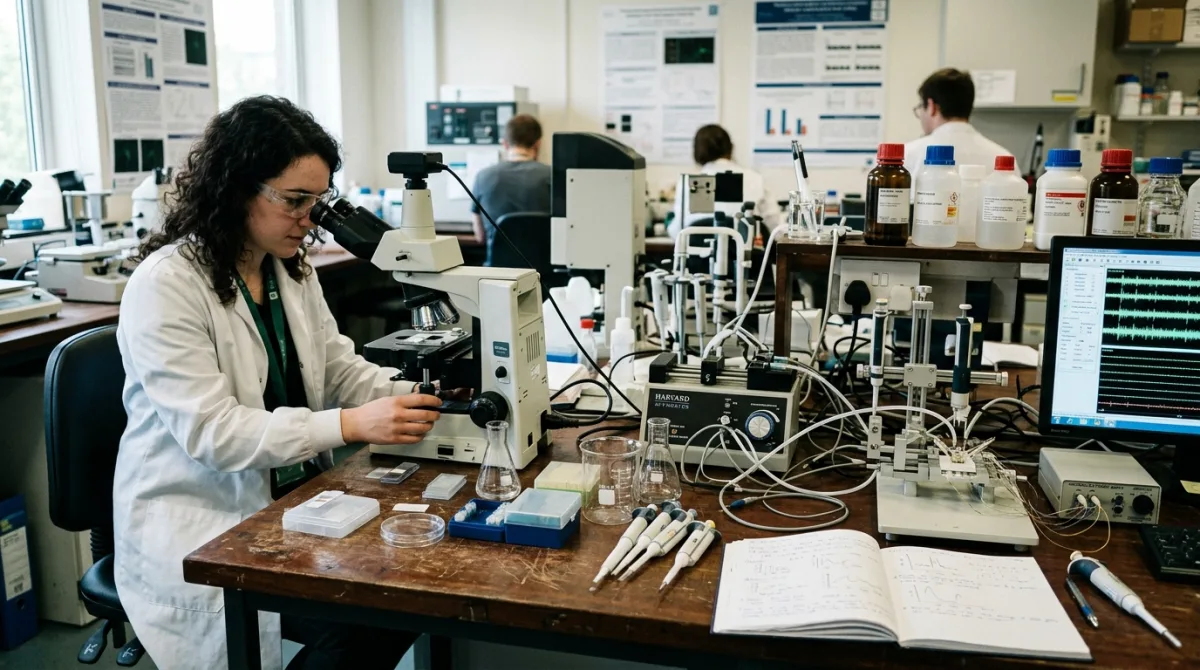
Novel Pathway Identified in Memory Research
A recent laboratory study has identified a previously unrecognised biological mechanism that appears to contribute to the intricate process of memory formation. This research offers a potential new perspective on how the brain encodes experiences at a cellular level. The findings were published in a peer-reviewed scientific journal, marking a significant development in the understanding of neurological function.
This discovery shifts focus onto a specific molecular interaction within brain cells not previously considered central to the initial stages of memory encoding. It provides a new target for investigation into the fundamental processes that underpin learning and recall. The study's careful methodology suggests a direct link between the activation of this pathway and the consolidation of new information.
Unravelling the Sequence of Discovery
The journey to this discovery began with researchers observing unusual protein activity within specific brain regions of laboratory animals during controlled learning tasks. This initial observation prompted a deeper and more targeted investigation into the precise role of these particular proteins. Scientists hypothesised that these molecules might be involved in a previously unknown aspect of synaptic plasticity.
Utilising advanced imaging techniques and precise genetic manipulation, the research team was able to isolate and track the activity of these specific molecules in real-time. The experimental design involved meticulously controlled environments where memory encoding could be precisely stimulated and measured. This rigorous approach allowed for the direct correlation between the novel pathway's activation and successful memory recall in the animal subjects, providing robust preliminary evidence for its involvement.
Factors Determining Future Outcomes
The progression of this initial laboratory finding into a broader understanding of memory will depend on several critical factors, each presenting its own set of scientific and practical challenges. The inherent complexity of brain function means that extrapolating single findings requires careful validation across multiple research avenues.
- Replication: Independent research groups must reproduce the initial findings under similar experimental conditions to confirm the validity and robustness of the reported mechanism.
- Species translation: The observed pathway in laboratory animals needs thorough investigation for its presence and functional activity within human brain tissue, which involves distinct ethical and practical considerations.
- Interference potential: Understanding precisely how this newly identified pathway interacts with and influences established memory mechanisms is crucial, as disrupting one could inadvertently affect others or broader cognitive functions.
- Therapeutic specificity: Any future therapeutic interventions based on modulating this pathway would require extremely precise targeting to avoid widespread neurological side effects or unintended alterations to other cognitive processes.
Each of these factors represents a significant hurdle that necessitates extensive further research and collaboration across the scientific community. The trade-offs involved in pursuing one aspect often impact the feasibility and safety of others, highlighting the methodical nature of scientific advancement in this field.
Potential Impact on Key Groups
Future neurological research
This discovery primarily affects the direction and focus of neurological research efforts globally, particularly for scientists studying memory, learning, and neurodegenerative conditions. Researchers may now incorporate this potential pathway into their theoretical models of brain function and design experiments to test its interactions with known mechanisms. The immediate impact is largely theoretical, redirecting academic discourse and influencing grant applications over the short to medium term, likely over the next five to ten years.
This could lead to a significant re-evaluation of existing hypotheses regarding how memories are initially formed and stored at a cellular level. It provides a novel area for exploration, potentially shifting paradigms in certain sub-fields of neuroscience. The allocation of research funding often follows such promising preliminary findings, fostering competition and collaboration among institutions.
Patients with memory disorders
Individuals living with conditions such as Alzheimer's disease, other forms of dementia, or memory impairments are not directly affected by this preliminary finding at present. There is no immediate change to current treatments, diagnostic approaches, or patient care protocols based on this study. The research remains firmly within the realm of basic science.
However, in the long term, potentially over several decades, this foundational research could open entirely new avenues for novel therapeutic targets. This represents a distant prospect for new pharmacological or genetic interventions aimed at improving cognitive function or mitigating memory loss. The translation from a newly identified pathway in animal models to human clinical application is a protracted and complex process.
Acknowledging the Study's Limitations
While the study presents compelling data derived from highly controlled laboratory environments, the intricate complexity of memory formation in living organisms, particularly humans, suggests caution in interpretation. The precise conditions under which this novel pathway was observed may not fully reflect the dynamic and multifactorial processes occurring in a functioning brain outside the lab. Memory is influenced by a vast array of biological, psychological, and environmental factors beyond the scope of a single, focused experiment.
The observed memory pathway may be an artefact of highly specific laboratory conditions and not a primary or universally active mechanism in natural memory formation.
This perspective highlights the considerable challenge of extrapolating highly controlled experimental results to the broader, less predictable biological systems found in natural settings. It underscores the potential for findings to be context-dependent, rather than universally applicable across all forms of memory or all species. Further research would therefore need to demonstrate its relevance across a wider range of physiological states, cognitive tasks, and environmental conditions.
Outstanding Questions and Uncharted Territory
Clinical relevance and human translation
It remains unclear whether this newly identified memory pathway operates with the same prominence, or indeed at all, within the human brain. The leap from findings in animal models to direct human application often involves significant challenges, including fundamental differences in brain structure, cellular interactions, and the overall complexity of human cognition. Further extensive research is required to ascertain if these mechanisms are conserved across species and what specific role they might play in human memory function, both in healthy individuals and those with cognitive impairments. This includes understanding the potential for ethical investigation in human subjects and developing appropriate methodologies.
Observable Signals for Future Progress
The scientific community will likely focus its initial efforts on replicating these findings in various independent laboratories across the globe. Subsequent research will aim to identify whether similar molecular pathways exist in human brain tissue, potentially through detailed post-mortem studies or the development of advanced non-invasive imaging techniques capable of detecting such activity in living subjects. There will also be concerted efforts to understand how this novel pathway integrates with the established models of synaptic plasticity and long-term potentiation, which are currently understood as foundational to memory formation.
Indications of significant progress would include the publication of corroborating studies in other peer-reviewed scientific journals, providing independent validation of the initial findings. Further signals might involve a noticeable increase in grant funding specifically directed towards investigating this particular molecular mechanism or related research areas within neuroscience. The development of new research tools or methodologies specifically designed to probe this pathway in more complex biological systems would also signify substantial advancement in the field's understanding and capabilities.
Reader responses
Responses are read by the desk before they appear. A factual correction reaches us fastest here, and is made on the article itself with a dated note.
No responses on this report yet.