Governing coalition bill stalled in committee over key amendments
A crucial bill proposed by the governing coalition has encountered a significant roadblock in committee, as disagreements persist over several key amendments, leading to a prolonged delay in its progression.
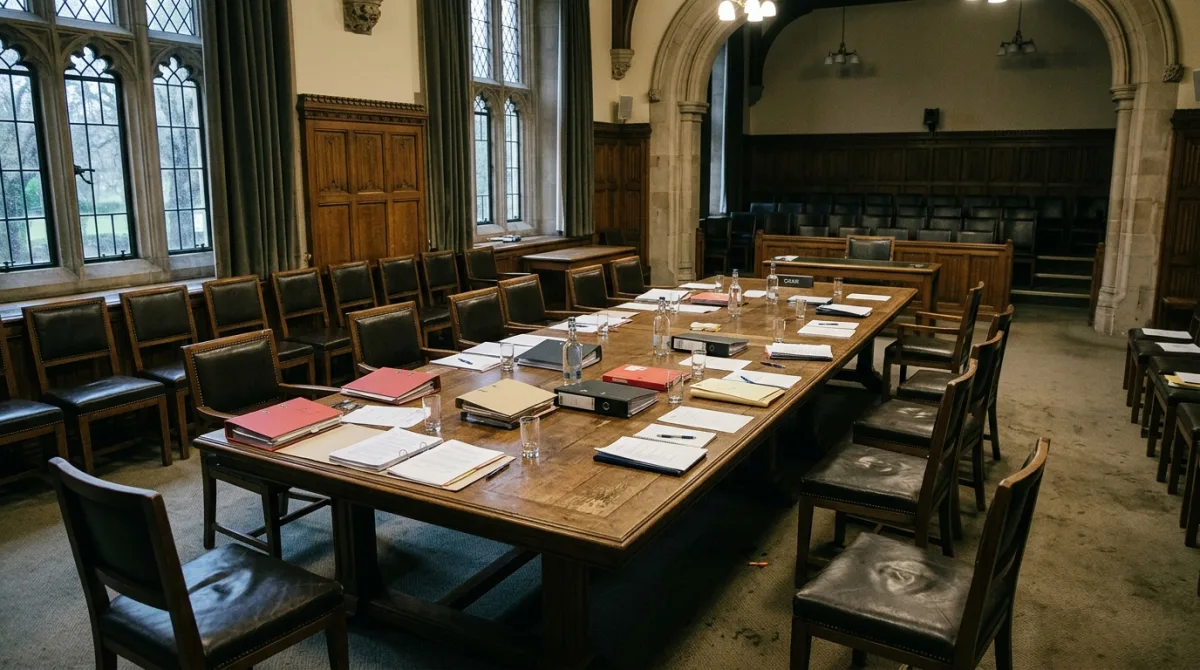
Governing Coalition Bill Stalled in Committee
A significant legislative initiative from the governing coalition has encountered a substantial delay, having been stalled indefinitely in a parliamentary committee. The proposed legislation, central to the government’s agenda for comprehensive reform in a key public service sector, failed to progress past its detailed scrutiny stage.
This impasse arose from an inability to reconcile fundamental differences on several crucial amendments proposed during the committee proceedings. The setback represents a notable challenge for the government’s capacity to deliver on its stated policy platform, particularly for a bill positioned as a cornerstone of its legislative programme.
The Path to Impasse
The bill, initially introduced into the House of Commons several months ago, successfully navigated its second reading with a working majority, despite some public expressions of concern from within the coalition’s own benches. Following this parliamentary hurdle, the legislation was subsequently referred to a dedicated Public Bill Committee, a standard procedure for detailed line-by-line examination and the consideration of proposed changes.
Over a period of several weeks, the committee meticulously reviewed the bill’s clauses, during which numerous amendments were tabled. These proposed alterations originated from both opposition parties and, significantly, from backbench Members of Parliament representing both constituent parties of the governing coalition. The amendments targeted specific provisions related to the bill's funding mechanisms, the devolution of powers to local authorities, and the scope of eligibility for new services.
Disagreements over these proposed changes escalated, particularly concerning amendments put forward by a junior coalition partner and a vocal faction of the senior partner's backbenchers. These amendments sought to fundamentally alter the bill's financial commitments and its overall reach, challenging the original policy intent. Despite intensive efforts by government whips to broker a compromise and build consensus, the committee ultimately suspended its proceedings, citing an irreconcilable inability to agree on the most contentious revisions.
This suspension has left the bill in legislative limbo, with no clear timeline for its resumption or a path forward. The protracted negotiations and eventual breakdown underscored the deep divisions that emerged during the scrutiny phase, highlighting the complexities inherent in managing a coalition's legislative programme through the parliamentary process.
Factors Shaping the Outcome
The trajectory and eventual fate of this stalled legislation are influenced by several interconnected factors, each carrying significant weight in the parliamentary arena.
- Coalition Unity: The degree to which the two primary parties forming the governing coalition can maintain a unified front on policy. This often necessitates difficult trade-offs between their distinct manifestos and the broader, agreed-upon programme for government, where internal dissent can paralyse progress.
- Backbench Influence: The capacity and willingness of MPs from the governing parties, particularly those not holding ministerial office, to challenge the government line or advocate for substantial alterations to proposed legislation. This influence can stem from strong constituency concerns, ideological convictions, or a desire to assert greater parliamentary authority.
- Opposition Strategy: The tactical approach adopted by opposition parties in their engagement with the bill. Their choices range from outright rejection of the legislation, to strategic attempts to significantly reshape its content through amendments, or even providing tactical support to dissenting government MPs to amplify internal divisions.
- External Pressure: The impact of lobbying efforts from various external organisations, including professional bodies, charitable foundations, industry groups, and public interest campaigns. These groups can exert considerable pressure on individual MPs or entire parliamentary blocs, raising the political cost of certain policy choices.
These interwoven dynamics create a highly complex legislative environment. The bill’s ultimate resolution will largely depend on the government’s ability to skillfully navigate these internal divisions and respond effectively to external demands, balancing political expediency with policy integrity.
Affected Groups and Implications
Local Authorities and Service Providers
Local councils across the United Kingdom, which bear significant responsibility for the on-the-ground delivery of public services, are directly impacted by this legislative delay. Many had been actively anticipating the introduction of the new framework, which was intended to provide much-needed clarity regarding their statutory duties and the associated funding streams for the proposed reforms in social care provision.
The prolonged uncertainty surrounding the bill’s future means that critical long-term strategic planning for local authority budgets and the commissioning of vital services, affecting millions of residents, remains in an indeterminate state. Councils had projected the new legislative arrangements to come into effect within the next 18 to 24 months, a timeline now significantly jeopardised by the committee’s impasse, leading to potential delays in service improvements.
Citizens Requiring Support
Individuals and families who currently rely upon, or anticipate needing, the specific public services targeted by the stalled bill will experience the ongoing consequences of its lack of progress. The proposed reforms were designed to address long-standing issues such as inconsistencies in access to crucial support and perceived inequities in existing funding models for vulnerable populations, problems that continue to persist without the new legislation.
An estimated substantial share of the population, particularly those in vulnerable circumstances including elderly individuals and those with long-term health conditions, had hoped for greater clarity, improved provision, and a more equitable system. The indefinite delay prolongs the operation of the current system, which has faced consistent criticisms regarding its capacity, fairness, and overall ability to meet demand across different regions.
The Governing Coalition's Reputation
The governing coalition itself faces significant repercussions regarding its perceived ability to effectively deliver on its ambitious legislative agenda. This particular bill was publicly presented as a cornerstone policy, fundamental to demonstrating the coalition's capacity to govern effectively, enact meaningful change, and successfully unite diverse political interests from its constituent parties.
The public perception of the coalition's competence and its internal cohesion could be substantially affected by this legislative paralysis, particularly concerning its mandate to implement significant, cross-departmental reforms. A prolonged inability to advance key bills can erode public trust among the electorate over the coming months and potentially impact future electoral prospects.
The Case Against the Current Account
While much of the public discourse has centred on internal disagreements within the governing coalition as the primary cause for the bill's stalling, an alternative perspective suggests a different set of dynamics at play. This view posits that the committee's inability to progress is less a symptom of fundamental policy disputes among government partners and more a consequence of deliberate and calculated parliamentary tactics by opposition parties.
The strongest objection to this account states that the committee's inability to progress the bill is primarily a result of concerted, well-organised obstruction by opposition members, rather than a genuine failure of the governing coalition to find internal consensus.
Proponents of this alternative analysis argue that many opposition amendments, while appearing to address legitimate concerns and propose constructive changes, were strategically formulated to exploit and amplify any pre-existing divisions within the coalition. The sheer volume and intricate nature of these amendments could be interpreted as an intentional effort to overwhelm the committee process, thereby preventing any swift resolution.
According to this viewpoint, the government might have, in fact, achieved a workable internal compromise on its own terms, but the consistent and extensive parliamentary manoeuvres by the opposition rendered any forward movement impossible within the current committee structure. This perspective shifts the blame for the legislative stagnation away from internal government struggles and towards the effectiveness of opposition tactics.
Uncertainty Ahead
Path to Resolution and Timelines
The precise pathway for the governing coalition to unblock the legislative process for this significant bill remains largely undefined. Several potential avenues exist, each carrying its own political complexities: these could include offering substantial concessions on the most contentious amendments, undertaking a comprehensive redrafting of specific problematic sections of the legislation, or even opting to temporarily withdraw the bill with the intention of reintroducing a revised version at a later, more opportune date. However, no official commitment to any of these approaches has been made public.
The timeline for any potential resolution is highly uncertain, with no immediate indications from government sources regarding a revised legislative strategy or a projected date for committee proceedings to resume. This period of legislative limbo could extend from a matter of weeks, requiring intense behind-the-scenes negotiation, to many months, depending critically on the political will to compromise and the capacity for consensus-building both within the coalition and across the parliamentary divide.
Observing Future Signals
Political observers will now keenly monitor for observable signals from key figures within the governing coalition, particularly any public statements or strategic shifts articulated by the Prime Minister or relevant departmental ministers. These pronouncements could indicate a new approach to the stalled legislation, perhaps suggesting a willingness to compromise further or a determination to push forward with a modified version.
The parliamentary business schedules released in the coming weeks will also offer crucial insights. Any allocation of additional time for informal, cross-party talks outside the formal committee structure, or conversely, a prioritisation of other legislative items, could signal the government's current intentions regarding the stalled bill. A prolonged absence from the parliamentary agenda might suggest a temporary shelving of the legislation.
Furthermore, the actions and public pronouncements of the influential backbench MPs and junior coalition partners who initially championed the contentious amendments will be critically important. Their continued insistence on their proposed changes, or a demonstrated willingness to negotiate and accept alternative compromises, will heavily influence the government's scope for manoeuvre and the bill's overall prospects for eventual revival and passage.
Reader responses
Responses are read by the desk before they appear. A factual correction reaches us fastest here, and is made on the article itself with a dated note.
No responses on this report yet.