Governing coalition confronts internal divisions on budget plan
The governing coalition faces significant internal disagreements regarding its proposed budget plan, with key factions struggling to find common ground on spending priorities and fiscal policies. This impasse threatens the timely approval of the national budget.
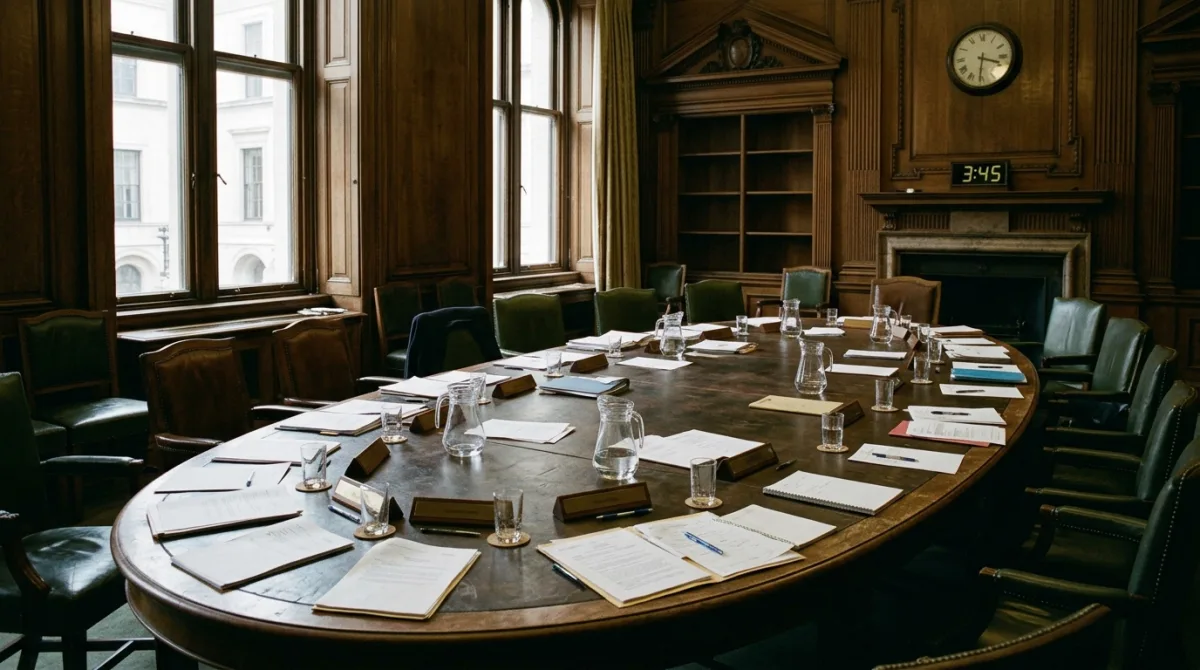
Governing Coalition Confronts Internal Divisions on Budget Plan
The governing coalition is currently locked in substantial internal disagreement over its proposed national budget plan, delaying its parliamentary presentation. Factions within the alliance are clashing on key fiscal priorities, particularly concerning spending cuts and revenue-raising measures intended to address the nation’s considerable deficit. This emergent friction threatens the stability of the legislative agenda and the government's ability to deliver on its foundational pledges.
The divisions have become publicly apparent through delayed committee meetings and conflicting statements from senior figures across the coalition partners. These public disagreements underscore the challenges inherent in governing with a multi-party alliance, particularly when faced with significant economic pressures and differing ideological commitments to public spending and taxation.
How the Impasse Emerged
The current coalition government was formed on a platform of fiscal responsibility and targeted investment, following an election that saw no single party secure an outright majority. An initial framework agreement outlined broad principles for economic management, including commitments to reduce national debt and bolster public services, which provided a basis for initial cooperation. However, the subsequent process of translating these broad principles into concrete policy has proved challenging.
The detailed budget process began with ministerial departments submitting spending requests, which were then reviewed against treasury targets and independent economic forecasts. Discrepancies between these requests and the overarching fiscal limits led to early internal tensions, as various departments vied for limited resources. As the Treasury began to finalise specific departmental allocations and potential tax adjustments, the inherent ideological differences between the coalition's constituent parties became increasingly pronounced, culminating in the current impasse over several high-profile spending and revenue proposals.
Factors Deciding the Outcome
Several interconnected factors will ultimately determine the shape of the final budget plan and the longevity of the coalition itself. The resolution will likely involve a series of painful trade-offs, balancing the demands of fiscal discipline with political palatability and the foundational agreements that initially brought the coalition together.
- Numerical Strength: The number of backbench members from each coalition partner who are prepared to either vote against the proposed budget or abstain. A substantial bloc of dissenters from the junior partner, for instance, could deny the government the simple majority required for passage, forcing concessions that might alienate the senior partner’s core support base. The trade-off here is often between maintaining ideological purity for one faction and ensuring the government's legislative viability and ability to pass any budget at all.
- Public Opinion: The public reaction to specific proposed measures, particularly those involving welfare, taxation, or key public services. Widespread disapproval of a specific cut, amplified by media coverage and opposition scrutiny, can create significant political pressure for a reversal, even if fiscally convenient. Conversely, strong public support for a particular spending area, such as healthcare or education, can make cuts politically unfeasible, often requiring a re-evaluation of revenue streams or other spending priorities to avoid electoral damage.
- Economic Projections: Updated forecasts from independent bodies regarding economic growth, inflation, and national debt will exert considerable influence. A worsening economic outlook might necessitate more stringent cuts or higher taxes, exacerbating internal disagreements and making compromise harder to achieve for all parties. Conversely, an improved projection might offer more fiscal headroom, potentially easing the pressure for the most contentious austerity measures, though this can also lead to renewed demands for increased spending from different factions, restarting internal debates.
- Leadership Authority: The willingness and capacity of the Prime Minister and other senior coalition leaders to exert discipline and broker compromises. Their ability to convince dissenting members that the overall stability of the government outweighs specific policy objections is paramount. This often involves a delicate balance of offering minor concessions in some areas while standing firm on others, risking accusations of betraying foundational principles from one side or alienating a crucial voting bloc on the other.
The capacity for flexibility within the agreed fiscal envelope will be rigorously tested, as each faction seeks to protect its core priorities while acknowledging the necessity of a unified budget. The final plan will be a testament to the art of political negotiation under pressure.
Who is Affected by the Budget Standoff
Public Sector Workforce
A substantial share of the nation's public sector workforce, numbering in the millions across various departments and local authorities, faces uncertainty regarding their terms and conditions. Proposed measures under discussion include a potential freeze on public sector pay rises for a further period, affecting an estimated 5.5 million individuals, and a review of pension contributions. These proposals aim to reduce the annual departmental expenditure by billions over the next three years, but could lead to significant industrial action and a decline in staff morale across essential services, including healthcare, education, and local government.
Households with Lower and Middle Incomes
Households falling within the lower and middle income brackets could experience direct impacts from potential changes to universal credit, child benefit, or specific tax thresholds. Discussions include adjustments to the taper rate for benefits, which could reduce the take-home income for hundreds of thousands of working families, particularly those with multiple children. Furthermore, proposals to raise the threshold for certain indirect taxes might disproportionately affect those with less disposable income, increasing the cost of everyday goods and services over the coming year, adding to existing cost-of-living pressures.
Small and Medium-sized Enterprises (SMEs)
The country's extensive network of small and medium-sized enterprises, which collectively employ a significant proportion of the private sector workforce, faces potential changes to business rates and access to government-backed loan schemes. While some factions advocate for tax relief to stimulate growth, others propose adjusting corporation tax rates for smaller entities to increase national revenue. This uncertainty could hinder investment decisions and job creation within a sector vital for economic recovery, particularly impacting firms with narrow profit margins over the next two fiscal periods as they navigate increased operational costs and fluctuating consumer demand.
Regional Development Initiatives
Several major regional development initiatives, intended to address long-standing economic disparities across the country, are under review as part of the budget negotiations. Projects encompassing infrastructure upgrades, skills training programmes, and local enterprise zones, with multi-billion-pound funding commitments over the next decade, could see their allocations reduced or phased out. This would impact communities identified for 'levelling up' efforts, potentially slowing job growth and economic regeneration in areas most in need of investment, affecting thousands of local businesses and residents who rely on these projects for employment and local services.
The Case Against the Current Approach
Critics of the government’s approach contend that the current internal squabbles mask a more fundamental flaw in the budget strategy itself, arguing that even a resolved plan would be insufficient to meet the nation's long-term economic challenges. They suggest that the proposed cuts and revenue adjustments, while contentious within the coalition, represent only marginal adjustments to a fiscal framework that fails to stimulate sustainable growth or adequately support public services. This perspective posits that the focus on internal consensus building distracts from the need for genuinely transformative economic policy.
The budget plan, even if successfully negotiated, remains an insufficient response to the foundational economic pressures facing the nation.
Furthermore, some economic commentators argue that the very act of prolonged internal dispute erodes public confidence and investment certainty, regardless of the final outcome. The protracted negotiations delay crucial decisions on national priorities, which in turn can lead to increased costs or missed opportunities for economic advancement. They assert that the government's current priority on internal cohesion overshadows the urgency of decisive national economic action to address issues such as productivity gaps, rising cost of living, and the decarbonisation of industry.
What is Not Yet Known
The Precise Nature of Final Compromises
It remains unclear which specific areas of spending or taxation will ultimately be conceded or reinforced as the coalition seeks to bridge its internal divide. While broad areas of disagreement are known—such as the balance between welfare cuts and targeted investments—the exact details of any revised proposals are subject to ongoing, closed-door negotiations. This includes specific percentage adjustments to benefit rates, the precise investment figures for particular infrastructure projects, or the exact scope of tax changes for certain sectors. The final package could entail a combination of minor adjustments across many departments, or a significant shift in one or two highly contentious policy areas, the implications of which are yet to be fully modelled and understood by the public and affected parties.
What Happens Next
The coming days are expected to feature intensified negotiation rounds between senior coalition figures, often behind closed doors, aimed at forging a workable compromise before the budget's formal presentation. Public statements from ministers will be scrutinised for any shifts in rhetoric or indications of progress towards consensus, though formal announcements are unlikely until a deal is secured. Any revised budget proposals or framework documents will likely emerge from these discussions, potentially followed by an accelerated legislative timetable to present them to Parliament for debate and votes.
Key parliamentary committees may also issue further reports or hold hearings, offering insight into the evolving debate and the potential impact of proposed measures. The tone of public commentary from backbench MPs from both coalition partners will serve as a strong indicator of whether a deal is nearing or if dissent continues to harden. Failure to reach agreement could lead to a confidence vote, a potential reshuffle of ministerial responsibilities, or even the collapse of the legislative agenda, signalling deeper instability within the government.
Reader responses
Responses are read by the desk before they appear. A factual correction reaches us fastest here, and is made on the article itself with a dated note.
No responses on this report yet.